Signal person training and certification represent critical qualifications in the construction and heavy equipment industries. A certified signal person serves as the vital communication link between crane operators and ground personnel, ensuring safe equipment movement on job sites. Whether you're new to construction or looking to advance your career, understanding how to obtain your certification through proper signal person training is the first step toward a rewarding profession.
What Does a Signal Person Do on a Job Site?
Signal persons are essential safety professionals responsible for directing equipment operations, particularly cranes and tower systems. Their primary duty is to communicate between the equipment operator and ground crews using standardized hand signals, voice communication, or electronic devices. This role requires constant awareness of the work environment, including personnel locations, load paths, and potential hazards.
On a typical job site, a signal person performs the following responsibilities:
- Positions themselves where the crane operator has clear visibility
- Uses standardized hand signals to direct load movements with precision
- Maintains two-way radio communication with the operator when necessary
- Monitors the load, rigging equipment, and surrounding workers throughout the lift
- Ensures compliance with safety protocols and identifies potential hazards
- Documents load information and communicates load weight to the operator
- Maintains constant communication until the load is safely positioned
The signal person's expertise directly impacts workplace safety. Miscommunication or incorrect signals can result in equipment damage, injuries, or fatalities. This is why signal person training covers both technical skills and safety-critical communication protocols.
OSHA Legal Requirements (29 CFR 1926.1419)
OSHA's Construction Standards at 29 CFR 1926.1419 establish mandatory requirements for signal persons on construction sites using cranes and derricks. Understanding these regulations is essential for anyone pursuing crane signal person certification.
Key OSHA signal person requirements include:
- Signal persons must be designated and positioned where they can see the equipment and load clearly
- Only trained and designated individuals may serve as signal persons
- Operators must obey signals from the designated signal person
- If the signal person cannot clearly see the operator or load, an additional line of communication must be established
- Signal persons must wear high-visibility clothing and protective equipment
- Employers must ensure signal persons understand the standardized signals being used
- Hand signals must follow the American National Standards Institute (ANSI) standards unless modified by the employer
- Voice communication systems must allow two-way communication and be tested before use
OSHA signal person requirements emphasize that certification demonstrates competency in applying these regulations, making certified professionals more valuable to employers and safer on job sites.
Step 1: Understand the Role Requirements
Before enrolling in signal person training, assess whether this career path aligns with your abilities and career goals. Signal persons must possess several key attributes and physical capabilities:
- Strong communication skills—both verbal and non-verbal
- Excellent situational awareness and attention to detail
- Physical stamina for standing and working outdoors in various weather conditions
- Ability to remain calm under pressure during complex lifting operations
- Sound judgment and decision-making skills in safety-critical situations
- Willingness to follow strict safety protocols without exception
- Basic understanding of construction equipment and crane operations
Understanding OSHA signal person requirements at this stage ensures you're fully committed to the responsibilities the role demands. Research job postings in your area to see what additional qualifications employers expect alongside your certification.
Step 2: Complete Qualified Signal Person Training
Enrolling in a comprehensive signal person online course or in-person program is the cornerstone of your certification journey. Quality signal person training covers:
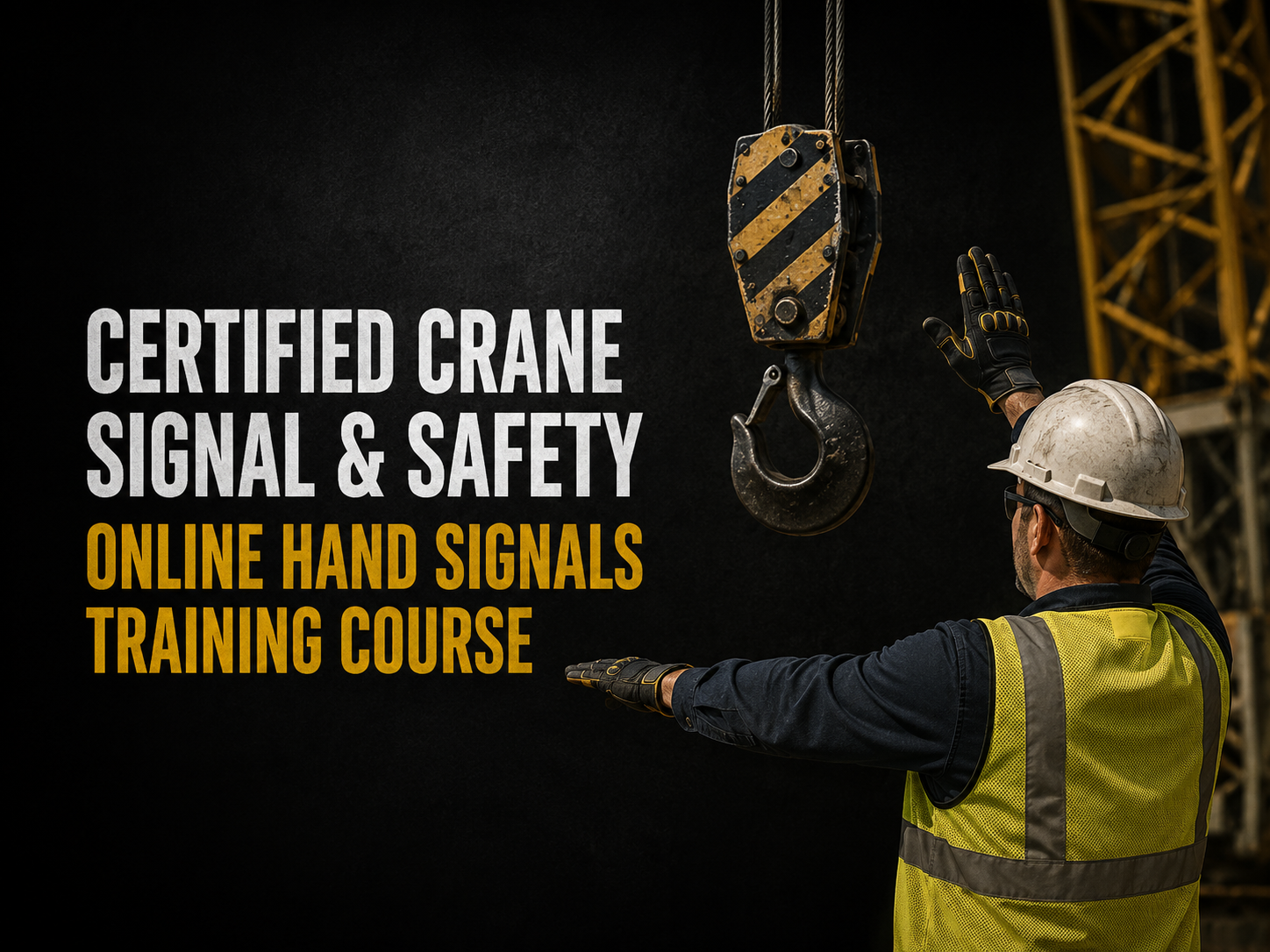
Recommended certification
Certified Crane Signal & Safety: Online Hand Signals Training Course
$30 · ~1h online · certificate issued same day · valid 2 years
Also read: Signal Person Certification Online: Fast Track Your Career on Crane and Tower Crews · Signal Person Training & Certification: OSHA Requirements Explained
- Hand Signals: Mastery of ANSI-standardized hand signals including move, stop, raise, lower, and directional movements
- Voice Communication: Radio protocols, communication clarity, and backup communication procedures
- Equipment Knowledge: Understanding crane types, load capacities, rigging configurations, and equipment limitations
- Safety Principles: Identifying hazards, environmental factors, and preventing incidents
- Legal and Regulatory Standards: OSHA requirements and industry best practices
- Practical Scenarios: Real-world case studies and simulated lifting operations
Training typically requires 16-40 hours of instruction, depending on the provider and depth of content. Look for providers offering crane signal person certification that exceeds minimum requirements to strengthen your resume.
Step 3: Demonstrate Proficiency
After completing your signal person training, you'll need to demonstrate competency through practical assessment. This typically involves:
- Written examination covering regulations, hand signals, and safety protocols
- Practical demonstration of hand signals in various scenarios
- Role-play exercises simulating actual job site communication
- Instructor evaluation of decision-making in safety-critical situations
Proficiency assessment ensures you can apply knowledge in real-world conditions. Qualified trainers will observe your performance and provide feedback before issuing your certification.
Step 4: Get Certified and Stay Current
Upon successful completion of your signal person training and assessment, you'll receive your crane signal person certification. However, certification maintenance is crucial for ongoing employment and legal compliance.
Certification maintenance involves:
- Keeping your certification current by renewing as required (typically every 3-5 years)
- Staying informed about OSHA regulation updates and industry changes
- Attending refresher training to maintain skill proficiency
- Documenting your work experience and continuing education
- Following employer-specific signal procedures and company protocols
Many employers require proof of current certification during hiring. Regular refresher training demonstrates your commitment to safety and keeps your qualifications competitive in the job market.
Online vs. In-Person Signal Person Training
Both delivery methods have distinct advantages. A signal person online course offers flexibility, allowing you to study at your own pace and fit training around work schedules. Online programs are ideal for self-directed learners and those in remote locations.
In-person training provides hands-on practice with actual hand signals, direct instructor interaction, and immediate feedback. This method is particularly beneficial for developing confidence with practical demonstrations and networking with other professionals.
Consider your learning style, schedule, and access to training facilities when choosing between options. Many providers offer hybrid approaches combining online theory with in-person practical assessments.
How Much Do Signal Persons Earn?
Signal person careers offer competitive compensation. According to industry data, certified signal persons earn between $45,000 and $75,000 annually, with experienced professionals commanding higher wages. Factors affecting earnings include:
- Geographic location and local labor costs
- Years of experience and additional certifications
- Type of construction work and equipment specialization
- Union membership and prevailing wage requirements
- Project complexity and seasonal work availability
As you gain experience and pursue additional certifications, your earning potential increases significantly. Many signal persons transition into supervisory roles or specialize in complex operations like tower construction, commanding premium wages.
Start your certified signal person training today and build a stable, rewarding career in construction safety. Visit /courses to enroll in our comprehensive signal person online course and take the first step toward certification.