Signal person training is a critical component of workplace safety on construction sites and telecom tower projects. Under OSHA regulations, specifically 29 CFR 1926.1419, employers are required to ensure that signal persons are properly trained and competent to perform their duties safely and effectively. A qualified signal person acts as the essential communication link between crane operators and ground personnel, preventing accidents, injuries, and fatalities that can occur when visibility is limited or hazards are present. This comprehensive guide explains OSHA signal person requirements, training standards, and certification options to help construction and telecom companies maintain compliance while protecting their workforce.
What Is a Signal Person?
A signal person, also known as a signalman or signal operative, is a trained worker responsible for communicating instructions between crane operators and personnel on the ground. Using standardized hand signals, radio communications, or a combination of both, the signal person directs crane movements to safely position loads, protect workers, and prevent collisions with structures, equipment, and personnel.
In construction and telecom environments, signal persons are essential on projects involving:
- Tower erection and dismantling operations
- Heavy equipment placement and relocation
- Material hoisting and positioning
- Load handling in confined or congested areas
- Vertical construction and demolition activities
The signal person must have clear visibility of the load, the landing area, and the crane operator at all times, or possess reliable two-way communication systems to maintain safe operations throughout the lift.
OSHA Requirements for Signal Persons (29 CFR 1926.1419)
OSHA's Cranes and Derricks in Construction standard, 29 CFR 1926.1419, establishes mandatory requirements for signal persons on all construction sites where cranes or derricks are in use. These regulations ensure that signal persons possess the knowledge and skills necessary to prevent accidents and protect worker safety.
Key OSHA requirements include:
- Competency and Training: Every signal person must receive training from a qualified trainer before assuming job duties. Employers must ensure signal persons are competent in their assigned tasks.
- Formal Instruction: Signal person certification training must cover OSHA-mandated topics, including hand signals, communication protocols, load control, and hazard recognition.
- Employer Responsibility: Under 29 CFR 1926.1419(a), employers are responsible for ensuring signal persons are trained and that their training is documented.
- Retraining Requirements: Signal persons must receive refresher training if they demonstrate lack of knowledge or if operating procedures change significantly.
- Direct Communication: When radio communications are used, all parties must use the same frequency and language, as outlined in 29 CFR 1926.1419(d).
Non-compliance with OSHA signal person requirements can result in significant citations and penalties. Employers must maintain training records and ensure signal persons receive certified signal person training from approved providers.
Hand Signals vs. Radio Signals
OSHA recognizes two primary methods of crane signal communication: standardized hand signals and two-way radio systems. Each method has specific requirements and appropriate applications.
Hand Signals: The ANSI/ASSE A10.48 standard defines universal hand signals for crane operations. Hand signals are effective when the signal person has direct, unobstructed visibility of both the load and the crane operator. Advantages include no equipment dependency and immediate visual confirmation. However, hand signals are limited by distance and line-of-sight requirements.
Radio Signals: Two-way radio communication allows signal persons and operators to maintain contact even when visibility is obstructed. Radio signals are essential for:
- Multi-level construction with limited sightlines
- Telecom tower projects with complex spatial constraints
- Operations in congested urban environments
- Night operations or adverse weather conditions
OSHA requires that radio systems operate on dedicated frequencies, use clear language protocols, and include confirmation procedures to prevent miscommunication. Signal persons must be trained in both hand signals and radio communication to ensure flexibility and safety across varying job site conditions.
Duties and Responsibilities of a Signal Person
A qualified signal person carries significant responsibility for job site safety. Their primary duties include:
- Load Guidance: Direct crane operators with clear, precise signals to position loads safely and accurately.
- Hazard Identification: Continuously monitor the load path, landing zone, and surrounding areas for potential hazards including personnel, structures, and overhead obstacles.
- Safety Communication: Immediately signal the crane operator to stop operations if any unsafe condition is detected.
Recommended certification
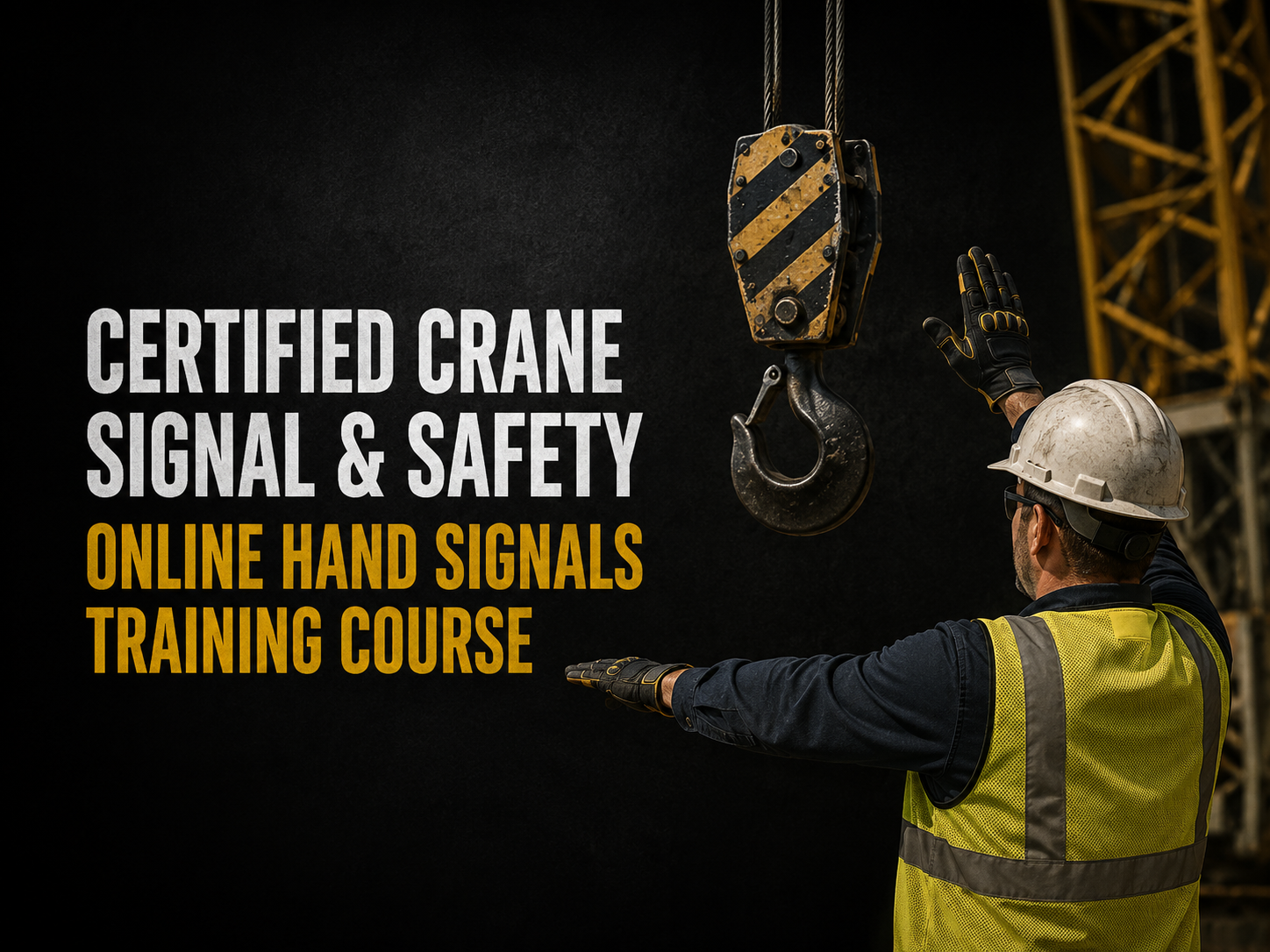
Certified Crane Signal & Safety: Online Hand Signals Training Course
$30 · ~1h online · certificate issued same day · valid 2 years
Also read: AI-Powered Drone Tower Inspections: Threat or Opportunity for Certified Climbers · Group Certification Discounts: Train Your Whole Crew for Less Than One OSHA Fine
- Personnel Protection: Maintain exclusion zones and ensure unauthorized personnel remain outside load drop areas.
- Position Maintenance: Remain in a location where the operator has clear visibility or maintain reliable radio contact at all times.
- Load Verification: Confirm that loads are properly rigged, secured, and ready for movement before signaling operations to commence.
- Documentation: Work with supervisors to document signal person duties and maintain safety logs when required.
Signal persons must remain alert, focused, and free from distractions throughout operations. They cannot perform other duties simultaneously or leave their assigned position without supervisor approval.
Who Qualifies as a Signal Person?
Not every worker can serve as a signal person. OSHA establishes specific qualifications for individuals assuming this critical role. A qualified signal person must:
- Be at least 18 years of age
- Possess the physical and mental ability to perform signal person duties safely
- Demonstrate clear understanding of hand signals or radio communication protocols
- Have completed formal certified signal person training from a qualified provider
- Understand load capacity, rigging, and crane safety principles
- Speak and understand the same language as the crane operator
- Have reliable vision and hearing sufficient for safe operations
- Receive training specific to the equipment and operations at their job site
OSHA does not recognize automatic qualifications based on previous job experience alone. Every signal person must complete formal training documentation before performing signal duties, regardless of experience level.
How to Get Certified Signal Person Training Online
Modern certification programs offer flexible, accessible signal person training through online platforms that meet or exceed OSHA requirements. Online certified signal person training provides several advantages:
- Flexibility: Complete training on your schedule, reducing project downtime and disruptions.
- Comprehensive Content: Professional online courses cover all OSHA-mandated topics, hand signals, radio procedures, and site-specific hazards.
- Documentation: Receive official certificates built to OSHA requirements and accepted by contractors, general contractors, and safety managers.
- Cost-Effectiveness: Online training reduces travel expenses and facilitates training for multiple team members simultaneously.
- Current Standards: Reputable providers update content regularly to reflect current OSHA regulations and industry best practices.
When selecting an online signal person training program, verify that the provider is recognized in your state, covers 29 CFR 1926.1419 requirements, and issues certificates upon successful completion. Many programs include final exams to ensure comprehension and competency.
Signal Person Training for Telecom Tower Crews
Telecom tower construction and maintenance present unique signal person training challenges. Telecom tower crews operate in high-risk environments involving vertical rigging, complex load positioning, and often limited ground visibility. Telecom signal person training must address:
- Tower-Specific Hazards: Electrical hazards, antenna interference, climbing equipment, and vertical load paths require specialized knowledge.
- Radio Communication Complexity: Tower sites often involve multiple radio frequencies and communication systems; signal persons must coordinate across these networks.
- Equipment Recognition: Telecom crews use specialized cranes, gin poles, and rigging equipment requiring specific training and understanding.
- Weather Considerations: Wind speed, lightning risk, and weather-related work stoppages demand heightened awareness and decision-making skills.
- Confined Space Operations: Limited work areas at tower bases and on rooftops require advanced signal person positioning and communication strategies.
Telecom companies should seek signal person training providers with specific experience in tower construction. Specialized courses ensure signal persons understand antenna work, climbing hazards, and the unique rigging requirements of telecom projects.
Ready to ensure your team meets OSHA signal person requirements? Get certified signal person training online through comprehensive courses designed for construction and telecom professionals. Our OSHA-compliant program delivers flexible scheduling, recognized certification, and expert instruction to keep your crews safe and compliant.