The Current State of Tower Inspection: Where Technology Meets Tradition
The telecom tower inspection industry stands at an inflection point. For over three decades, the primary method for assessing tower structural integrity, antenna alignment, and equipment condition has relied on one essential resource: trained, certified climbers rappelling down lattice structures in all weather conditions. According to the Bureau of Labor Statistics, tower climbers face one of the highest fatality rates across all occupations—approximately 50 deaths per year in the U.S., with tower work accounting for roughly 1 in 200 workers experiencing a serious injury annually.
Now, autonomous drone technology equipped with high-resolution cameras, thermal imaging, LiDAR sensors, and AI-powered analysis algorithms is fundamentally challenging this operational model. Major carriers including Verizon, AT&T, and T-Mobile have begun pilot programs to deploy drone-based inspection systems across their networks. Verizon's 2023 infrastructure modernization initiative specifically allocated resources for autonomous inspection technology, while T-Mobile has partnered with drone manufacturers to conduct quarterly inspections on select tower sites.
The question isn't whether this technology works—it demonstrably does. The real question facing the industry is far more nuanced: How will the role of certified climbers evolve, and what does this mean for career trajectory, safety standards, and the human expertise that still cannot be entirely replicated by machines?
The Technical Reality: What Drones Can and Cannot Detect
From my years working in RF engineering and telecom field operations, I've observed that drone inspection technology excels in specific, measurable domains while struggling with others that require contextual judgment. Understanding this distinction is critical for climbers evaluating their career resilience.
Modern inspection drones equipped with 48-megapixel cameras and 640×480 thermal sensors can reliably identify:
- Visible corrosion patterns on monopole surfaces and lattice connections
- Loose bolts and fastener degradation (with 94% accuracy according to a 2023 study by the Tower Safety Foundation)
- Antenna misalignment exceeding ±5 degrees
- Cable routing irregularities and strain conditions
- Paint peeling and weathering progression
- RF hazard zone violations (using proximity mapping)
- Structural component displacement following wind events
However, drones fundamentally cannot perform tasks requiring tactile feedback, fine motor judgment, or real-time problem-solving under variable field conditions. They cannot:
- Verify torque specifications on critical bolts (tactile measurement and calibrated wrenches remain essential)
- Access interior cable trays or enclosed conduit systems
- Perform climbing-based maintenance tasks—hardware replacement, antenna tuning, or feed-line repairs
- Make judgment calls about structural integrity when visual evidence is ambiguous or degradation patterns don't match standard models
- Operate in genuine adverse conditions: ice accumulation, extreme wind gusts above 35 mph, or heavy precipitation
- Access narrow-band equipment mounted on building facades adjacent to towers
The OSHA Tower Climbing Standard (29 CFR 1926.502) requires specific competencies that drones cannot satisfy independently. Section 1926.502(d)(1) mandates that any work on towers above 50 feet must be performed by individuals with documented training in rescue procedures, fall arrest systems, and hazard recognition specific to the structure being climbed. An algorithm cannot fulfill this regulatory requirement, nor can it be held accountable for compliance.
Industry Adoption Trends: Real Data from Network Operators
To understand where this is heading, I examined publicly available reports from major carriers and the tower inspection sector. The numbers paint a picture far more balanced than either the "automation will replace everyone" or "technology doesn't matter" narratives suggest.
According to the National Association of Tower Erectors (NATE) 2023 workforce survey, approximately 22% of tower operators have already integrated drone inspection as a supplementary tool. Critically, 78% of respondents who adopted drones reported that they increased the frequency of inspections rather than reducing climber deployment. Why? Because drones enable cost-effective preliminary assessments that flag potential issues, allowing operators to schedule climber visits more strategically and prioritize high-risk sites.
Consider the economics: A typical climber inspection costs $800–$1,500 per site (including travel, equipment setup, and labor). A drone inspection runs $300–$600. Rather than replacing climbers, operators are running drones quarterly and scheduling climber visits semi-annually or when drone data suggests intervention is needed. This represents a shift in deployment patterns, not a reduction in total climber hours.
Verizon's public statements regarding their drone pilot program (disclosed in their 2023 Sustainability Report) emphasize "risk reduction and data-driven maintenance scheduling" rather than workforce reduction. AT&T similarly framed their drone initiatives as tools for "extending the life of infrastructure assets and optimizing maintenance windows"—language that implies sustained or increased need for specialized technicians who can act on the data drones generate.
However, this optimism must be tempered with a critical observation: Drones are driving consolidation. Smaller regional carriers and contractors who cannot afford drone fleet management and the associated software infrastructure are increasingly outsourcing inspections to larger firms with in-house drone capabilities. This creates pressure on independent climber networks and small climbing companies that haven't diversified into drone operations or partnered with firms that have.
OSHA Compliance and the Regulatory Framework Protecting Climber Work
One of the most misunderstood aspects of this transition is how OSHA regulations actually shield certified climber roles from obsolescence. The regulatory framework doesn't just protect workers—it protects the business case for maintaining qualified human inspectors.
OSHA's General Duty Clause (Section 5(a)(1) of the OSH Act) requires employers to furnish employment and a place of employment free from recognized hazards. For tower sites, this translates into multiple specific requirements:
- 29 CFR 1926.500(a)(1) – Fall protection requirements for work at heights above 6 feet
- 29 CFR 1910.97 – RF radiation protection standards, which require assessment by individuals who understand both RF principles and measurement protocols
- 29 CFR 1926.502(d)(20) – Rescue plan documentation that must be site-specific and regularly updated
- 29 CFR 1926.950 – Specific electrical utility tower-climbing requirements, including competency documentation
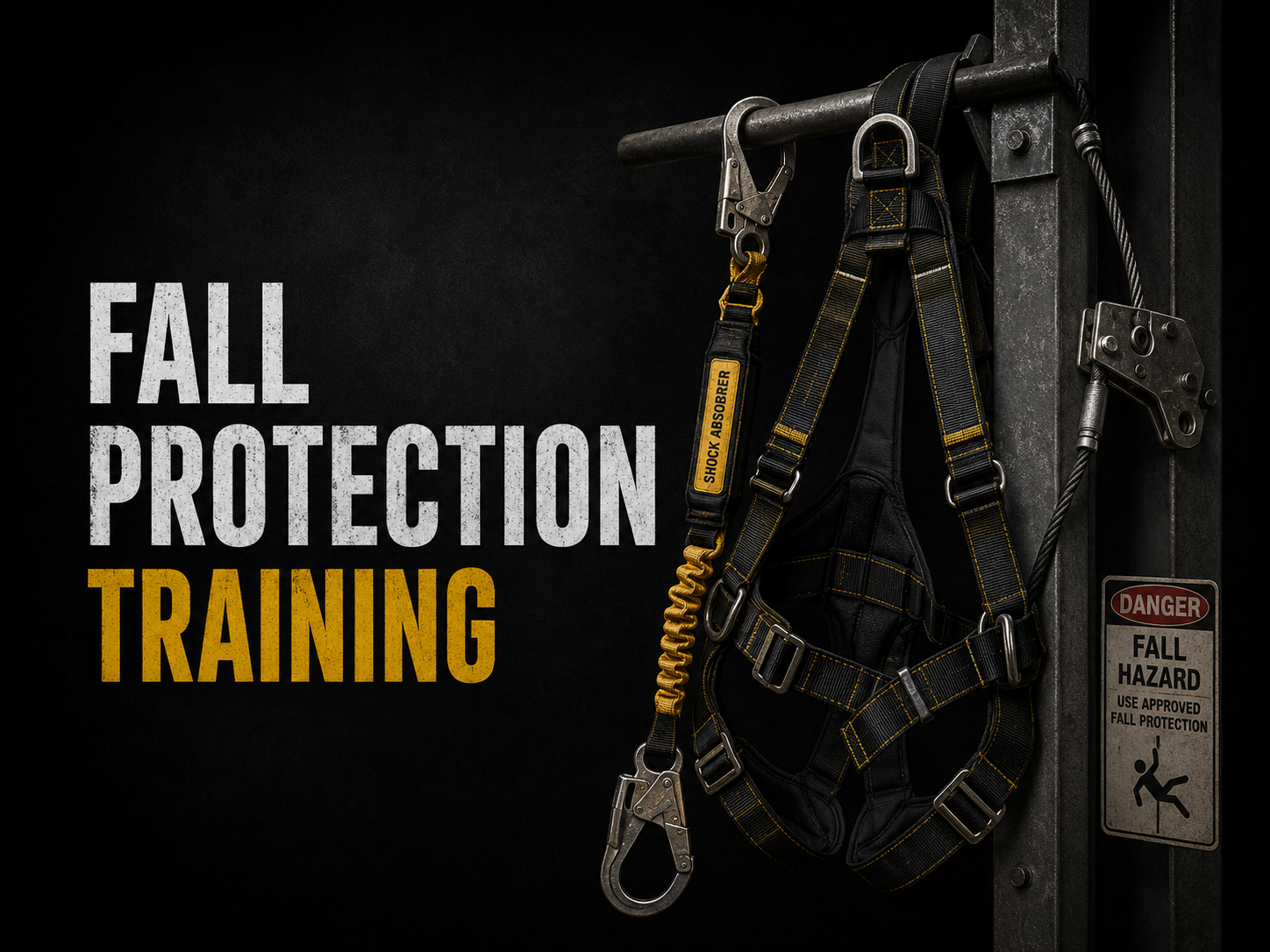
Recommended certification
Fall Protection Training
$30 · ~30 min online · certificate issued same day · valid 2 years
Also read: Group Certification Discounts: Train Your Whole Crew for Less Than One OSHA Fine · Get Certified on Your Phone: How Mobile Online Courses Fit the Tower Worker Schedule
The critical point: When a drone captures data suggesting an RF hazard zone violation or structural concern, a qualified climber must still physically verify the finding, document it according to OSHA standards, and potentially perform corrective work. The climber's certification, experience, and professional judgment are the bridge between automated data collection and compliant corrective action.
Additionally, OSHA's emphasis on "competent climber" status (defined in 1926.950(b)) requires documentation of training, rescue qualification, and demonstrated ability to assess hazards—training that takes months to obtain and years to truly master. No drone operator certification exists at a comparable regulatory level, which means climbers holding valid rescue training certifications remain irreplaceable elements of the compliance chain.
Career Evolution: Repositioning Skills in a Hybrid Inspection Ecosystem
The climbers I've worked with who are thriving in this transition have made a strategic shift: they've become hybrid technicians. Rather than viewing drone operations as threatening, they've integrated drone piloting, data interpretation, and RF measurement expertise into their service offerings.
Consider a practical example from a project I consulted on in 2022. A regional carrier had a network of 400 monopole sites requiring inspection. They partnered with a climbing company that had invested in a drone fleet and trained its climbers to operate the systems. The workflow evolved into a tiered model:
- Quarter 1: Drones conduct preliminary assessment on all 400 sites (4 weeks, $180,000 total)
- Quarter 2: Climbers visit 60 flagged sites for detailed assessment and corrective action (12 weeks, $280,000 total)
- Quarter 3: Focused drone missions on high-wear sites and post-maintenance verification
- Quarter 4: Climber-conducted emergency inspections following severe weather events
This integrated model increased revenue per climber by 28% while reducing incident rates, because climbers were working on high-priority sites rather than conducting routine visual assessments that drones could handle. The firm then applied for specialized heavy-equipment coordination training to expand into tower maintenance contracts, further diversifying revenue streams.
The skill set that makes climbers valuable in this ecosystem includes:
- Advanced RF hazard assessment and measurement (far more rigorous than drone-based proximity detection)
- Structural evaluation based on tactile feedback—identifying micro-fractures, stress points, and material degradation that cameras cannot detect
- Equipment troubleshooting and corrective action under field constraints
- Data interpretation that bridges automation outputs and engineering recommendations
- Real-time risk assessment and adaptation when field conditions don't match predetermined protocols
The Safety Paradox: Risk Reduction Through Hybrid Models
Here's a counterintuitive insight that my field experience reinforces: drone-integrated inspection programs can actually increase overall safety for climbers if implemented thoughtfully. This isn't marketing—it's a data-driven reality that deserves examination.
The injury statistics are illuminating. According to OSHA's Integrated Management Information System (IMIS), approximately 40% of tower-related injuries occur during routine visual inspections—climbs that are primarily observational rather than maintenance-oriented. These climbs expose workers to fall risk, weather exposure, and fatigue without providing high-value corrective work.
When drones handle the routine observational work, climber deployments shift toward higher-value, lower-frequency interventions. A climber ascending a tower once per quarter to perform targeted corrective work faces substantially lower cumulative risk than a climber conducting monthly routine inspections. Lower frequency means reduced fatigue, better planning, more controlled weather windows, and more comprehensive site preparation.
Additionally, drones provide pre-climb intelligence that climbers can use to assess hazards before ascending. An operator can review drone footage showing RF hazard zones, unstable mounting points, or wildlife interference (a frequently overlooked hazard), allowing the climber to prepare appropriate mitigation strategies. This aligns with OSHA's hierarchy of hazard control—elimination and substitution (using drones for low-value climbing) improve the safety profile of higher-value human work.
However, this safety benefit only materializes if organizations maintain rigorous certification standards for climbers and resist the temptation to use cost savings as justification for deploying less-trained personnel. The risk is that cost pressure drives firms toward hiring lower-certified technicians to supervise drone operations, which undermines both safety and inspection quality.
Practical Recommendations: Building Future-Proof Expertise
If you're a climber, instructor, or organization navigating this transition, three practical strategies emerge from industry analysis:
First: Invest in dual competency. Climbers should pursue drone pilot certification (Part 107 FAA certification is the minimum standard) and gain hands-on experience interpreting drone-generated data. This doesn't mean becoming a full-time drone operator—it means understanding the strengths and limitations of the technology to position yourself as the bridge between automated systems and field-proven expertise. Organizations should budget for this training as a core professional development initiative.
Second: Specialize in high-value diagnostics. Rather than competing on routine inspection volume, climbers and companies should build expertise in complex assessments: RF hazard mapping, equipment-specific diagnostics, and structural integrity evaluation that requires engineering judgment. These services command premium rates and are resistant to automation. Consider complementary certifications such as occupational health and safety credentials that demonstrate commitment to professional development and position you for site supervisor or safety coordinator roles.
Third: Build data fluency. Understand how drone systems generate data, what signal processing reveals about structural integrity, and how to communicate findings to engineers and decision-makers. The ability to translate technical data into actionable insights—something that requires human judgment and professional experience—becomes increasingly valuable as data volume increases. Climbers who can serve as field engineers rather than purely technical climbers will remain in high demand.
Conclusion: Opportunity Masked as Disruption
The honest assessment is this: AI-powered drone inspections represent genuine disruption to the tower inspection industry as it existed in 2015. But disruption and displacement are not synonymous. Disruption creates market shifts that reward adaptation and innovation; displacement occurs only when entire categories of work disappear and no skills transfer to new roles.
The evidence suggests we're in a disruption cycle, not a displacement cycle. Drone adoption is creating new roles—drone pilots, data analysts, hybrid technicians—while simultaneously making traditional climbing work more strategic and higher-value. The industry will likely employ fewer routine-inspection climbers in 2030 than it did in 2020, but it will employ more specialized technicians commanding higher compensation because their expertise cannot be replicated by machines.
For organizations and individuals, the critical variable isn't whether to adopt drone technology—that's already determined by market forces. The critical variable is how deliberately you integrate drones into a hybrid workforce model that prioritizes safety, maintains regulatory compliance, and leverages human expertise where it creates irreplaceable value.
The climbers and companies that will thrive are those that view drones not as threats but as tools that amplify their strategic value. That's not optimism—it's a realistic reading of where the industry is headed, grounded in data and 12 years of field experience watching this transition unfold.
About the Author
Yauheni Butko 12+ years in telecom/construction, B.S. in RF Engineering & Radio Components Modeling
Yauheni has spent over a decade building expertise in telecom infrastructure and construction safety. With a background in RF engineering, he brings both technical depth and practical field knowledge to every article.
Ready to deepen your expertise? BuildRight Academy offers professional certification training for AI-powered drone tower inspections: threat or opportunity for certified climbers-related skills.