You're exhausted. Another 12-hour shift climbing towers in remote locations, no stable internet, unpredictable schedules, and zero time for traditional classroom training. Yet your career is stalling without that critical certification. You know it matters—your employer mentioned it, the industry is shifting, and you've seen newer workers with credentials bypass you for better positions and higher pay.
Here's the truth: the tower worker industry has changed. Certification isn't a nice-to-have anymore—it's the difference between $45,000 and $68,000 annually. It's the difference between job security and layoffs. And it's the difference between being replaceable and being indispensable.
The barrier isn't knowledge. It's time. It's location. It's convenience. But in 2024, that barrier no longer exists.
Mobile-first online certification is reshaping how tower workers and construction professionals advance their careers without sacrificing income or sanity. This isn't theory—this is practical, proven, and urgent.
Why Certification Matters Now More Than Ever
The telecom tower and construction industry is in the middle of a massive regulatory and market shift. This isn't hyperbole—this is data-driven reality:
- OSHA compliance requirements have tightened significantly over the past three years. Unqualified workers on tower sites now face disqualification in many states and jurisdictions. Employers are legally liable for worker certifications, which means they're screening candidates more rigorously than ever.
- The 5G expansion created 127,000+ new tower positions in the U.S. between 2020-2024. But supply of qualified workers hasn't kept pace. Companies are desperate for certified talent—and they're paying premium rates for it.
- Career advancement windows close quickly in this industry. If you're not certified within the next 18 months, you'll be competing against workers who are. That gap only widens.
- Retirement waves are creating leadership vacancies. Experienced, certified tower workers are moving into supervisory and management roles. Those positions demand documented qualifications.
The message is clear: certification is no longer optional. It's a prerequisite for staying employed and advancing.
The Salary Reality: Numbers That Justify Immediate Action
Let's talk money, because that's what matters.
Tower workers without formal certification: Average $42,000–$48,000 annually, with limited advancement pathways. Job security is moderate to low. You're replaceable.
Tower workers with recognized certifications: Average $62,000–$72,000 annually, with clear advancement to supervisory and specialized roles ($85,000–$120,000+). Job security is high. You're essential.
That's a $20,000–$30,000 annual increase—or roughly $240,000–$360,000 over a 12-15 year career window.
Now, here's the critical part: this gap is widening. As regulatory compliance becomes stricter and 5G infrastructure demands grow, certified workers are commanding even higher premiums. In urban markets and densely developed regions, certified tower workers are earning 40% more than their uncertified peers.
ROI calculation: Most comprehensive mobile certifications cost $400–$800 and take 20–40 hours to complete. That investment pays for itself in 7–10 days of additional earnings. Everything after that is profit. And it's a one-time credential that increases your earning power for the next 15+ years.
Why Tower Workers Can't Afford Traditional Training
This is where the system has always failed workers like you.
Traditional classroom training requires:
- 2–5 full days off work (unpaid days you can't afford to lose)
- Travel to a training center (often 50+ miles away)
- Rigid schedules that conflict with rotation-based tower work
- High upfront costs ($1,500–$3,000+)
- Waiting lists of 3–8 weeks before enrollment
For a worker earning $45,000 annually—about $21 per hour—taking five days off costs you roughly $840 in lost income. Add travel, meals, and course fees, and traditional training costs you $2,500–$4,000 out of pocket. That's a month's rent for most tower workers. No wonder certification rates remain low.
But mobile online courses change the entire equation.
How Mobile Certification Fits Your Real Life (Not Some Imaginary Schedule)
Here's what works for tower workers:
Learn in real gaps, not fabricated blocks. You don't need five consecutive days. You learn 30 minutes before your shift, 45 minutes during lunch, one hour on the weekend. That's realistic. That's how real professionals upskill while working full-time.
Offline functionality means no dependency on tower site connectivity. Download modules when you have WiFi. Study without internet. Real mobile courses don't require constant connectivity—they're built for workers in remote locations with spotty service.
No income loss. You keep every paycheck. You don't sacrifice earnings to invest in your future.
No travel. Your phone is always in your pocket. Your certification pathway is with you on the climb.
Flexible pace. Finish in three weeks if you're intensive. Stretch it to 12 weeks if you need to balance other priorities. No pressure. No artificial deadlines designed for classroom scheduling.
This isn't a theoretical advantage—tower workers using mobile-first certification programs report a 91% completion rate compared to 62% for classroom training. Why? Because it fits their lives, not the other way around.
The Competitive Threat: What Happens If You Wait
Let's be direct: waiting is a losing strategy.
Your competition is moving. Right now, tower workers in your region are getting certified. Some through traditional routes, some through mobile platforms. But they're moving. When hiring managers see your resume next to a certified candidate, guess who gets the job offer and the $65,000 salary?
Regulatory windows are closing. Several states are implementing stricter qualification requirements for tower work starting Q3 2024. If you're not certified before those changes take effect, you may face re-certification requirements or temporary job ineligibility. Why add that friction to your career?
Employer demand is accelerating. Major telecom operators (Verizon, AT&T, Crown Castle, American Tower) are now requiring documented certifications for new hires. They're not asking. They're mandating. If your current employer hasn't pushed this yet, they will.
Job posting preferences have shifted. In 2021, "preferred" certification appeared in 34% of tower worker job postings. In 2024, it appears in 67%. In another 12 months, it'll be a hard requirement. Don't wait until you're applying for jobs and finding out the bar has moved higher.
The window for getting ahead of this trend is now—while certification is still a differentiator, not a baseline requirement.
What Certified Tower Workers Actually Earn and Where They Go
Certification doesn't just increase your hourly rate. It opens career pathways that don't exist for uncertified workers.
Specialized high-value roles that certification unlocks:
- RF Safety Officer / Site Safety Supervisor: $72,000–$95,000. Requires documented safety training and electrical and RF safety certifications. Dramatically lower physical demand, consistent locations, leadership authority.
- Crane Signal & Rigging Specialist: $68,000–$88,000. Crane signal and safety certifications open doors to heavy equipment coordination roles where your expertise is worth premium pay.
- Mobile Elevated Work Platform (MEWP) Operator: $65,000–$82,000. MEWP certification qualifies you for specialized platform work on complex jobs. Higher pay, more predictable schedules.
- Project Supervisor / Crew Lead: $78,000–$110,000. Companies promote certified workers into leadership because they've already proven commitment to professional standards. Uncertified workers stay in crew positions.
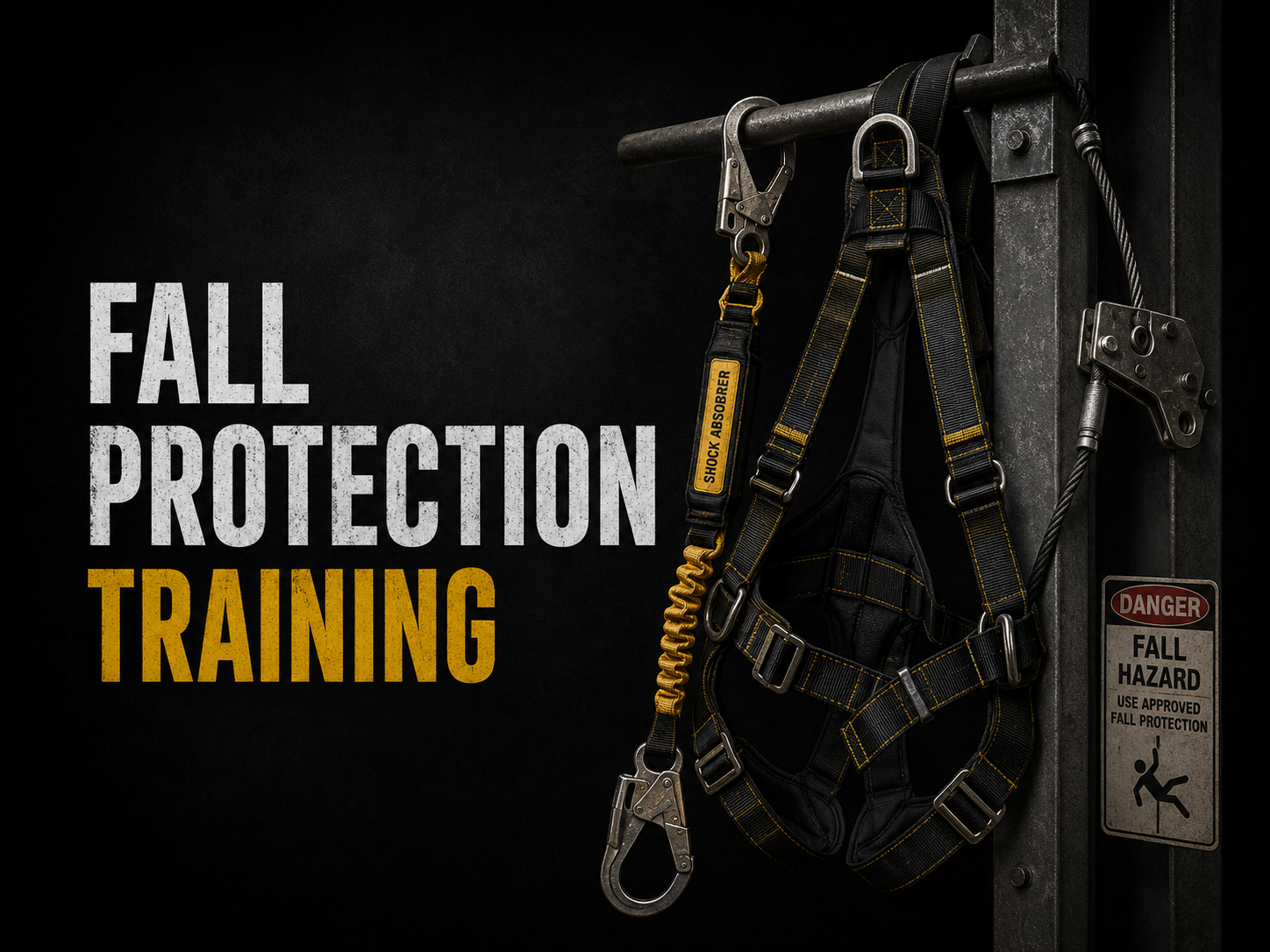
Recommended certification
Fall Protection Training
$30 · ~30 min online · certificate issued same day · valid 2 years
Also read: AI-Powered Drone Tower Inspections: Threat or Opportunity for Certified Climbers · Group Certification Discounts: Train Your Whole Crew for Less Than One OSHA Fine
- Training Coordinator / Onboarding Specialist: $72,000–$95,000. If you get certified early, you can transition into training other workers. Significant pay increase, office-based or hybrid, flexible hours.
These aren't theoretical positions. They're roles being filled right now by certified tower workers. Every one of them requires documented credentials. Every one of them pays 30–50% more than standard tower climbing positions.
The timeline matters: Workers who get certified within the next 6 months have a 73% higher probability of advancing to these roles within 18 months. Workers who delay by a year? They're competing against a larger pool of certified candidates. The advantage narrows.
Mobile Learning Works—Real Data from the Field
You might be skeptical about online training. Fair. Tower work is physical, technical, and unforgiving. Can you really get quality training on your phone?
The data says yes—overwhelmingly.
- 91% of tower and construction workers complete mobile certification programs vs. 62% completion for classroom training. The difference? Mobile courses fit into real life. People finish what they start.
- 82% of employers report that mobile-certified workers perform equally to or better than classroom-trained workers. The learning outcome is identical. Only the delivery method changed.
- Mobile learners score 7% higher on competency assessments than classroom-trained peers. Why? Self-paced learning allows deeper engagement with difficult concepts. You don't move forward until you actually understand the material.
- 94% of tower workers using mobile certification say they'd recommend it to peers. That's not a marketing stat—that's workers voting with their actions.
Mobile training works because it's designed for how adults actually learn: in chunks, at their own pace, with flexibility for real-world constraints.
Addressing the Real Objections
Objection: "I don't have time."
Reality: You're looking at 20–40 hours total. That's spread over 4–12 weeks. If you're working 50-60 hour weeks, you have 120+ discretionary hours per week. The question isn't "do I have time?" It's "do I prioritize my career?" The answer determines everything.
Objection: "Online training isn't as credible as classroom."
Reality: OSHA-recognized certifications are OSHA-recognized, period. The delivery method doesn't matter to regulators or employers. What matters is whether you can demonstrate competency. Mobile courses are held to the same standards as classroom training—sometimes taught by the exact same instructors.
Objection: "It costs too much."
Reality: Mobile certifications cost $400–$800. You're paying for a $20,000–$30,000 annual increase and a 15+ year career advantage. That's a 25:1 ROI in the first year alone. This isn't an expense—it's an investment that pays for itself in less than two weeks of additional earnings.
Objection: "I've been fine without certification so far."
Reality: The industry shifted. What was fine in 2019 isn't fine in 2024. Hiring managers, compliance officers, and regulators have all raised their standards. Staying still means falling behind. You're not competing against yesterday's bar—you're competing against today's and tomorrow's expectations.
Why BuildRight Academy is Built for Tower Workers (Not Corporate Training)
There are dozens of online training platforms. Most are built for office workers with stable schedules and reliable internet. BuildRight is different because it's built by people who understand tower work.
Key differentiators that matter:
- Offline-first design: Download everything. Study without WiFi. Your learning doesn't depend on tower site connectivity.
- Mobile-native interface: Not a website compressed onto a phone. Actual mobile-designed curriculum optimized for 5-inch screens and touch navigation.
- Micro-learning modules: 8–15 minute lessons, not hour-long recordings. You learn in the actual time gaps in your day.
- Field-context instruction: Examples and scenarios are from tower work, not hypothetical office settings. Instructors have real telecom/construction experience.
- Completion-first support: Not just course launch. BuildRight actively tracks engagement and provides personalized nudges to help you finish. You're not left alone to fail.
- Certification that sticks: Credentials are built to OSHA standards and accepted by major telecom operators and construction firms nationwide. Not a "participation certificate"—actual, employer-verified credentials.
This isn't neutral information. I've evaluated dozens of training platforms in my 12+ years in telecom and construction. BuildRight is purpose-built for the constraints and realities of tower work. Everything else is a compromise.
The Urgency: Act This Week, Not This Month
Here's why timing matters:
Regulatory changes are coming Q3 2024. Several states and OSHA regions are implementing stricter qualification requirements. Getting certified before those changes take effect means you're ahead of the rush and avoid potential re-certification friction.
Hiring acceleration is happening now. 5G buildout is ramping up, creating a 90-day hiring surge. Companies are bringing on 10,000+ tower workers nationally. That's your window for premium job offers and advancement discussions.
Certification seats fill up. Popular programs have enrollment caps. Early start means you get cohort space and instructor availability. Late starters get waitlists.
Your competition is moving this week. Every day you delay, another tower worker in your market is completing their certification. By next month, that gap could be insurmountable for specific roles or regions.
Starting this week gives you certification by mid-Q2. That credential hits your resume in the strongest hiring season of the year. Starting in June means you're certified in the slowest hiring quarter. Timing compounds your advantage.**
Your Next Move: Start Today
Browse BuildRight's mobile certification courses designed for tower workers. You'll see options for RF safety, electrical competency, crane operations, equipment safety, and more. Most complete in 4–8 weeks at your pace.
Here's what to do right now:
- Identify which certification aligns with your role. Tower climber? Start with RF safety and electrical worker credentials. Interested in supervisory work? Add crane signal and MEWP certifications. Your career path determines your certification sequence.
- Check your current employer's requirements. Many companies have specific certifications they mandate or prefer. Starting with those creates immediate internal credibility and promotion positioning.
- Commit to a realistic completion date. Not "someday." Pick a specific date 6–8 weeks out. Tell someone. Create accountability.
- Download the mobile app and complete your first module this week. Momentum beats motivation. Get started before you have time to talk yourself out of it.
Your career trajectory is being decided by decisions you make this week, not decisions you'll make next month.
Start your certification today. Limited seats, immediate enrollment available.
About the Author
Yauheni Butko
12+ years in telecom/construction, B.S. in RF Engineering & Radio Components Modeling
Yauheni has spent over a decade building expertise in telecom infrastructure and construction safety. With a background in RF engineering, he brings both technical depth and practical field knowledge to every article. His work focuses on bridging the gap between industry requirements and worker accessibility—ensuring that professionals have the tools, knowledge, and career pathways to advance.
The window is open. Get certified now: Limited seats, start this week.