The telecommunications construction sector continues to face significant safety challenges, particularly when working at heights on aerial work platforms. As the industry expands to support 5G deployment and tower climbing operations across North America, understanding fatality trends and prevention measures has become essential for contractors, safety managers, and training professionals. Recent OSHA data from 2025 reveals critical insights into aerial platform incidents that demand immediate attention from telecom construction teams.
OSHA 2025 Fatality Data: Key Findings in Aerial Work Platforms
OSHA's latest analysis of construction fatalities involving aerial work platforms (AWPs) shows that the telecom and tower construction sector remains among the highest-risk industries. The data indicates that falls from elevated work platforms continue to represent a substantial portion of construction-related deaths, with aerial lifts and bucket trucks being involved in a significant percentage of these incidents.
According to 2025 OSHA reports, the following factors consistently appear in aerial work platform fatalities:
- Improper fall protection: Many incidents involve workers not wearing harnesses or using inadequate safety equipment while operating from aerial platforms
- Inadequate training: Workers lacking proper certification in aerial lift operation and safety procedures represent a persistent risk factor
- Platform overload: Exceeding manufacturer weight limits and capacity specifications remains a leading cause of equipment failure
- Environmental conditions: High winds, unstable ground surfaces, and inclement weather contributing to platform instability
- Lack of maintenance: Poorly maintained equipment showing hydraulic failures and mechanical defects
Telecom construction operations, particularly those involving tower climbing and 5G infrastructure installation, frequently require extended use of aerial work platforms in challenging environments. The combination of height, equipment sensitivity, and complex job site conditions makes rigorous safety protocols non-negotiable.
Risk Factors Specific to Telecom Tower Construction and 5G Deployment
Telecommunications construction presents unique hazards that elevate the risk profile for aerial work platform operations. Tower climbing and 5G infrastructure projects often involve working near electrical lines, on uneven terrain, and at significant heights where safety margins are minimal.
Critical risk factors in the telecom construction sector include:
- Working in proximity to energized electrical equipment and power lines
- Operating aerial platforms on rooftops and uneven ground at cell tower sites
- Weather-dependent work schedules that may pressure workers to proceed in marginal conditions
Recommended certification
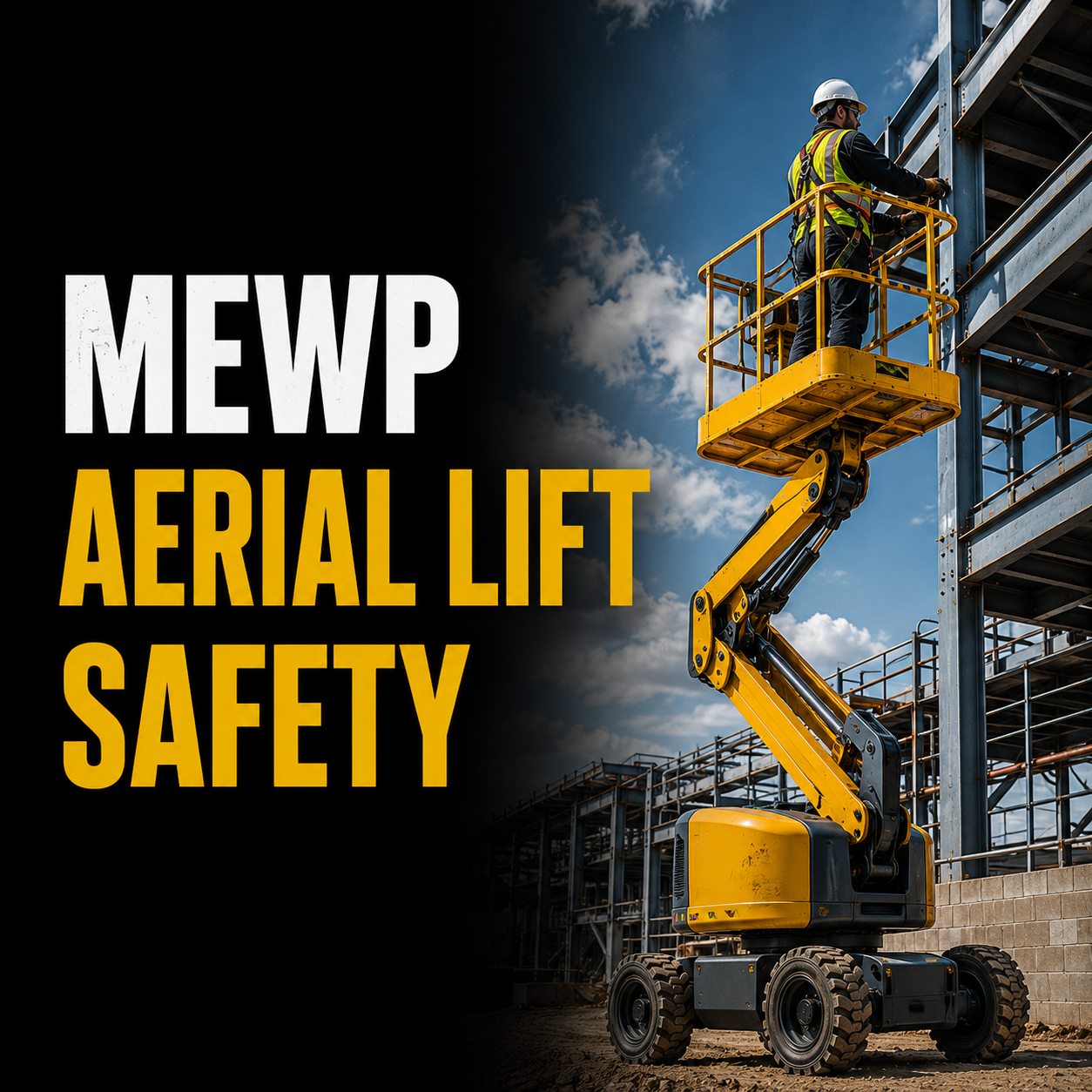
MEWP Aerial Lift Safety
$35 · ~1h online · certificate issued same day · valid 2 years
Also read: AI-Powered Drone Tower Inspections: Threat or Opportunity for Certified Climbers · Group Certification Discounts: Train Your Whole Crew for Less Than One OSHA Fine
- Complex multi-crew coordination on 5G deployment sites with multiple contractors
- Time pressures associated with infrastructure rollout deadlines
Tower climbing operations specifically demand heightened attention to aerial platform safety. When workers transition between climbing and platform work, or when coordinating bucket truck operations near climbing activities, the potential for accidents increases substantially. The OSHA 2025 data emphasizes that sites combining multiple elevated work methods experience higher incident rates.
Safety Certifications and Training Requirements: What Works
The most effective defense against aerial work platform fatalities remains comprehensive, hands-on training and proper safety certifications. OSHA standards require that all operators and workers using aerial platforms receive training specific to the equipment type and the hazards present.
Essential safety certifications for telecom construction personnel include:
- Aerial Lift Operator Certification: Mandatory for anyone operating bucket trucks, boom lifts, and scissor lifts
- Fall Protection Training: Required for all workers at heights, covering harness use, anchor points, and rescue procedures
- Tower Climbing Certification: Specialized training combining aerial work platform operation with climbing-specific hazard recognition
- OSHA 10/30-Hour Cards: Industry-standard safety certifications demonstrating foundational safety knowledge
- Site-Specific Safety Briefings: Pre-shift reviews addressing unique conditions and hazards on individual job sites
Companies implementing comprehensive training programs report significantly lower incident rates. The 2025 OSHA data shows a clear correlation between workforce certification levels and safety performance, with contractors maintaining strict training and re-certification schedules experiencing fewer aerial platform incidents.
Moving Forward: Industry Best Practices for 2025 and Beyond
Preventing aerial work platform fatalities requires a multi-faceted approach combining equipment maintenance, environmental assessment, worker training, and safety culture. Telecom construction contractors expanding 5G infrastructure and maintaining existing tower networks must prioritize these safety measures as core operational practices.
Best practices supported by OSHA 2025 data include implementing regular equipment inspections, conducting comprehensive job hazard analyses before each project, ensuring all workers possess current safety certifications, maintaining clear communication protocols on multi-crew sites, and establishing no-tolerance policies for safety violations. Additionally, companies should invest in advanced safety technologies such as load monitoring systems and weather monitoring equipment for aerial operations.
Build Right Academy specializes in comprehensive training programs for telecom construction careers, offering courses in aerial work platform operation, tower climbing, fall protection, and OSHA-compliant safety certifications. Our instructor-led training helps construction professionals develop the skills and knowledge necessary to work safely in the dynamic telecom industry.