Mobile elevated work platform (MEWP) training and operator certification represent critical components of construction safety. Whether you're working on a commercial building project, performing maintenance tasks, or conducting utility work at height, understanding proper mobile elevated work platform training and safety protocols can be the difference between a productive day and a life-altering accident. This comprehensive guide covers everything aerial lift operators need to know about staying safe while working at elevation, including the latest safety standards, inspection procedures, and regulatory requirements for MEWP operator training and certification.
Top MEWP Hazards and How to Avoid Them
Aerial lift safety incidents remain a significant concern in the construction industry. According to OSHA statistics, approximately 42% of aerial lift-related fatalities involve workers who were not wearing fall protection, while 24% of fatal incidents occur due to operators exceeding platform weight capacity limits. Understanding these hazards is the first step toward prevention.
The most critical MEWP hazards include electrocution from contact with overhead power lines, falls from elevated platforms, tip-overs due to uneven surfaces or excessive speed, and structural collapse from overloading. Each hazard requires specific prevention strategies. To avoid electrocution, maintain a minimum 10-foot clearance from power lines and consider the boom reach before positioning equipment. Prevent falls through proper fall protection systems and harness attachment points rated for your weight and the anticipated shock load. Reduce tip-over risks by operating only on stable, level ground and adhering strictly to the manufacturer's maximum angle specifications. Never exceed platform weight limits—this includes personnel, tools, and materials.
Environmental factors also play a crucial role in safe MEWP operation. High winds, wet surfaces, and poor visibility significantly increase incident risk. Many facilities establish operational wind speed limits (typically 25-30 mph) beyond which MEWPs remain grounded. Always check weather forecasts before beginning work and cease operations immediately if conditions deteriorate.
Pre-Operation Inspection Checklist
A thorough pre-operation inspection is your first line of defense against equipment failure. OSHA requires that operators conduct visual inspections before each use, and many insurance providers mandate documented inspection records. The following checklist should be completed before every shift:
- Platform condition: Check for bent railings, cracked welds, broken flooring, or debris that could cause slips
- Safety rails and gates: Verify all guardrails are intact and gates close and lock properly
- Hydraulic systems: Look for leaks around cylinders, hoses, and connections; check fluid levels on the indicator
- Tires and wheels: Inspect for proper inflation, tread depth, cuts, or uneven wear patterns
- Boom and articulation: Test all boom sections for smooth movement, unusual sounds, or binding
- Control systems: Verify all buttons, switches, and emergency controls respond correctly
- Battery condition (electric units): Check charge level and look for corrosion on terminals
- Engine fluids (gas/diesel units): Confirm adequate oil, coolant, and fuel levels
- Safety devices: Test load sensors, inclinometers, and emergency descent systems
- Harness and anchorage points: Inspect for tears, fraying, or damaged attachment rings
- Documentation: Review maintenance records and note any outstanding repairs
Document your inspection with date, time, operator name, and any defects found. If issues are discovered, tag the equipment out of service immediately and report the problems to supervisors.
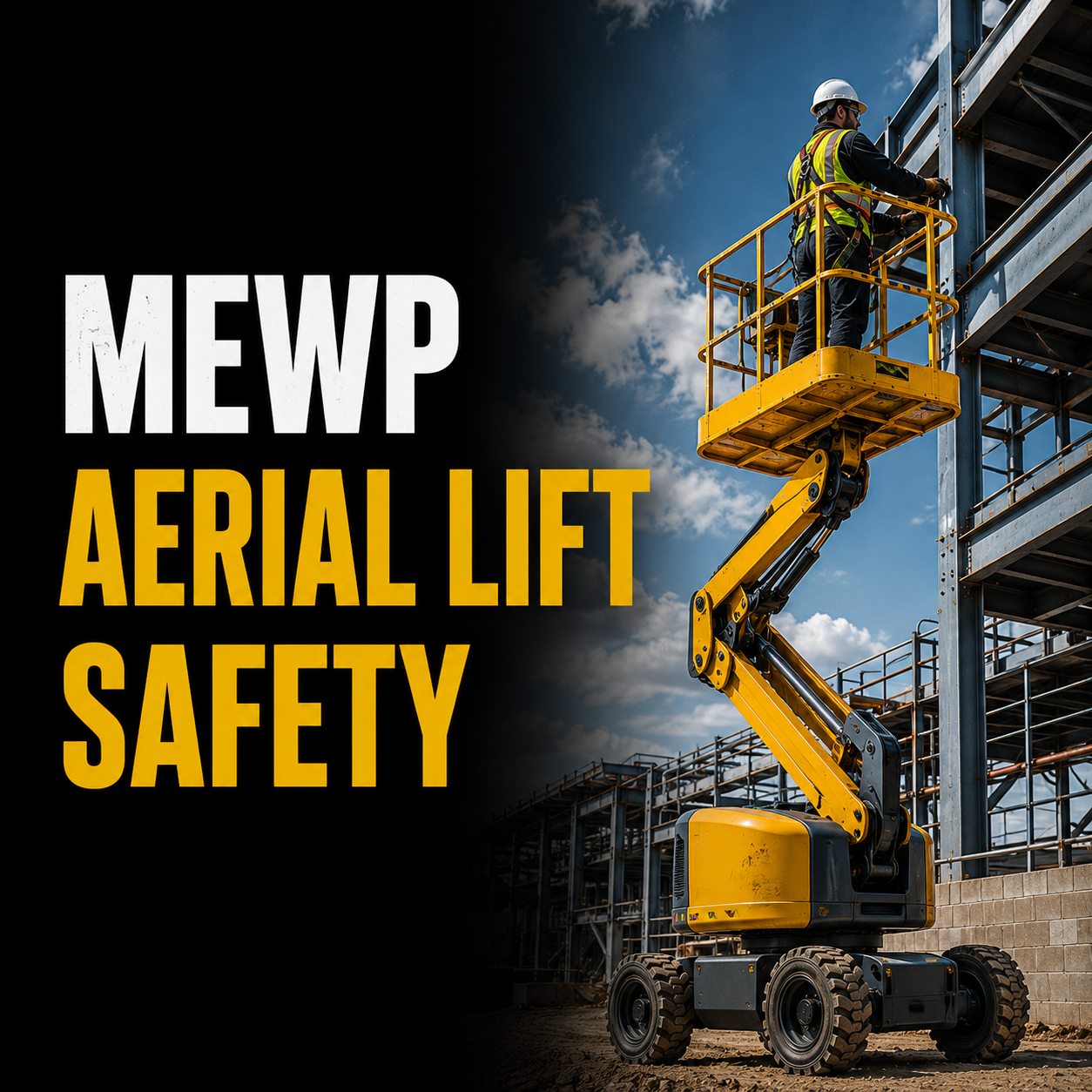
Recommended certification
MEWP Aerial Lift Safety
$35 · ~1h online · certificate issued same day · valid 2 years
Also read: MEWP Training Online: Complete Operator Certification Guide · Get Certified on Your Phone: How Mobile Online Courses Fit the Tower Worker Schedule
Safe Operating Procedures
Proper MEWP operator training covers fundamental operating principles that protect both the operator and ground personnel. Always review the specific manufacturer's manual for your equipment model, as operational requirements can vary significantly between different machines.
Begin each operation by establishing a clear work zone. Use traffic cones or barriers to keep unauthorized personnel at least 30 feet away from the MEWP, except when workers are assisting with setup or takedown. Ensure all personnel understand hand signals or communication methods—radios are ideal for noisy environments.
Never operate a MEWP alone. Maintain constant communication with a ground spotter who can monitor for hazards you cannot see from the platform. Climb into the platform smoothly using both hands and feet; do not jump. Once in the platform, secure your full-body harness to an anchorage point before raising the boom. Many serious injuries occur when operators delay this critical step.
Operate controls with deliberate, steady movements. Sudden jerking motions can destabilize the platform or cause you to lose your footing. Always keep the platform horizontal or within manufacturer-specified angles. When positioning over obstacles or soft ground, distribute weight evenly and avoid concentrated loads at platform edges. Maintain three points of contact when climbing or moving within the platform, and never lean beyond railings to reach tools or materials.
Fall Protection Requirements for MEWP Operators
Fall protection is non-negotiable in aerial lift work. OSHA requires 100% fall protection for any work at heights exceeding 6 feet, and most construction sites mandate fall protection for all elevated platform work regardless of height. Your protection system consists of multiple components that must work together seamlessly.
A proper full-body harness distributes fall forces across your torso, preventing the cinch injuries that can result from waist-only belts. Harnesses must fit snugly with no more than one finger fitting under the shoulder straps. Connect your harness to an anchorage point on the platform using a shock-absorbing lanyard or self-retracting lifeline. The anchorage must be rated for at least 5,000 pounds or a safety factor of at least 2.5 times the maximum intended load.
Maintain your fall protection equipment carefully. Inspect harnesses before each use for torn webbing, bent hardware, or damaged stitching. After a fall, the entire system must be removed from service and replaced, even if damage isn't immediately visible. Store equipment away from direct sunlight, moisture, and sharp objects that could cause hidden damage.
Never use fall protection equipment as a substitute for proper operating procedures. Fall protection is your backup system—your primary protection comes from stable operation and hazard avoidance.
When MEWP Certification Is Legally Required
MEWP certification requirements vary by jurisdiction and industry, but federal OSHA standards require that operators receive training appropriate to the equipment they operate. Many states and municipalities have adopted stricter requirements, mandating formal certification through accredited providers.
The most widely recognized credential is the Certified Mobile Elevated Work Platform Operator certification, which demonstrates competency across all major equipment types and scenarios. Some employers require certification even where regulations do not, viewing it as a best practice that reduces liability and insurance costs. Check your local regulations and company policies to determine your specific requirements.
Certification typically involves both classroom instruction covering hazard recognition, safety regulations, and maintenance procedures, plus hands-on practical training where you operate equipment under qualified supervision. Your MEWP certification online option may satisfy classroom components through interactive digital content, though most jurisdictions require in-person practical evaluation.
How Online MEWP Training Works
Online aerial lift safety training has evolved significantly, now offering comprehensive preparation that meets industry standards. Most quality programs combine video instruction, interactive modules, knowledge assessments, and detailed course materials that cover OSHA regulations, hazard recognition, equipment operation, maintenance procedures, and emergency response.
Effective online programs are developed by industry experts with decades of field experience and regularly updated to reflect current regulations and equipment innovations. You'll access course materials on your schedule, working through modules at a pace that allows proper comprehension. Self-assessments help identify knowledge gaps before you take final certification exams.
Upon completion of online coursework, you'll receive documentation of training completion. Many programs integrate with in-person practical training partnerships, allowing you to complete classroom work online, then schedule local hands-on evaluation with a qualified instructor.
Complete your MEWP operator certification 100% online through our comprehensive safety training program. We provide the knowledge foundation and documentation you need to operate MEWPs safely and legally.