Working at heights is one of the most critical responsibilities in the telecommunications and tower climbing industry. According to OSHA, falls remain the leading cause of death in construction and tower work. Understanding fall protection systems isn't just a regulatory requirement—it's essential for keeping yourself and your team safe on the job.
This comprehensive guide will walk you through everything beginners need to know about fall protection systems, from basic concepts to practical application in real-world scenarios.
What Are Fall Protection Systems?
Fall protection systems are engineered safety measures designed to prevent workers from falling or to arrest a fall in progress. These systems work together as an integrated approach to keep tower workers safe at heights.
OSHA requires fall protection for any work at heights of 6 feet or more. In the tower climbing industry, you'll often be working much higher, making understanding these systems absolutely critical.
Fall protection systems work on three fundamental principles:
- Prevention: Keeping workers from reaching fall hazards
- Arrest: Stopping a fall safely if one occurs
- Rescue: Enabling quick recovery and medical attention
The Four Types of Fall Protection Systems
1. Guardrail Systems
Guardrails are your first line of defense. These fixed barriers prevent workers from accidentally stepping into danger zones. Standard guardrail systems consist of a top rail, intermediate rail, and toeboard, with a height of 42 inches (plus or minus 3 inches).
While guardrails are excellent for stationary work platforms, they're less practical for dynamic tower climbing where you're constantly moving. However, understanding proper guardrail installation and maintenance is fundamental knowledge for any tower worker.
2. Safety Net Systems
Safety nets create a protective barrier below workers, designed to catch anyone who falls. These systems are typically used in high-rise construction and tower projects where workers may be exposed to falls of more than 30 feet.
Safety nets must extend 8 feet beyond the edges of the work area and have a maximum mesh opening of 6 inches. Regular inspection and maintenance are essential, as nets degrade over time from UV exposure and environmental stress.
3. Personal Fall Arrest Systems (PFAS)
This is the most common fall protection method for tower workers. A PFAS consists of an anchorage point, connectors, and a body harness that work together to stop a fall.
Key components include:
- Body Harness: Worn around the torso, designed to distribute fall forces safely
- Lanyard or Self-Retracting Lifeline: Connects you to the anchor point
- Anchor Point: A secure fixed structure rated to hold at least 5,000 pounds
The maximum free fall distance is 6 feet. Modern shock-absorbing lanyards and self-retracting devices help minimize impact forces during arrest, reducing injury risk significantly.
4. Warning Line Systems
Warning lines mark hazardous areas and remind workers to stay back from edges. While not a complete fall protection system on their own, they serve as an important alert mechanism, especially during material handling or when visibility is limited.
Essential Fall Protection Equipment for Tower Workers
Understanding equipment goes beyond knowing what items exist—you need to know how to inspect, use, and maintain them properly.
Body Harnesses
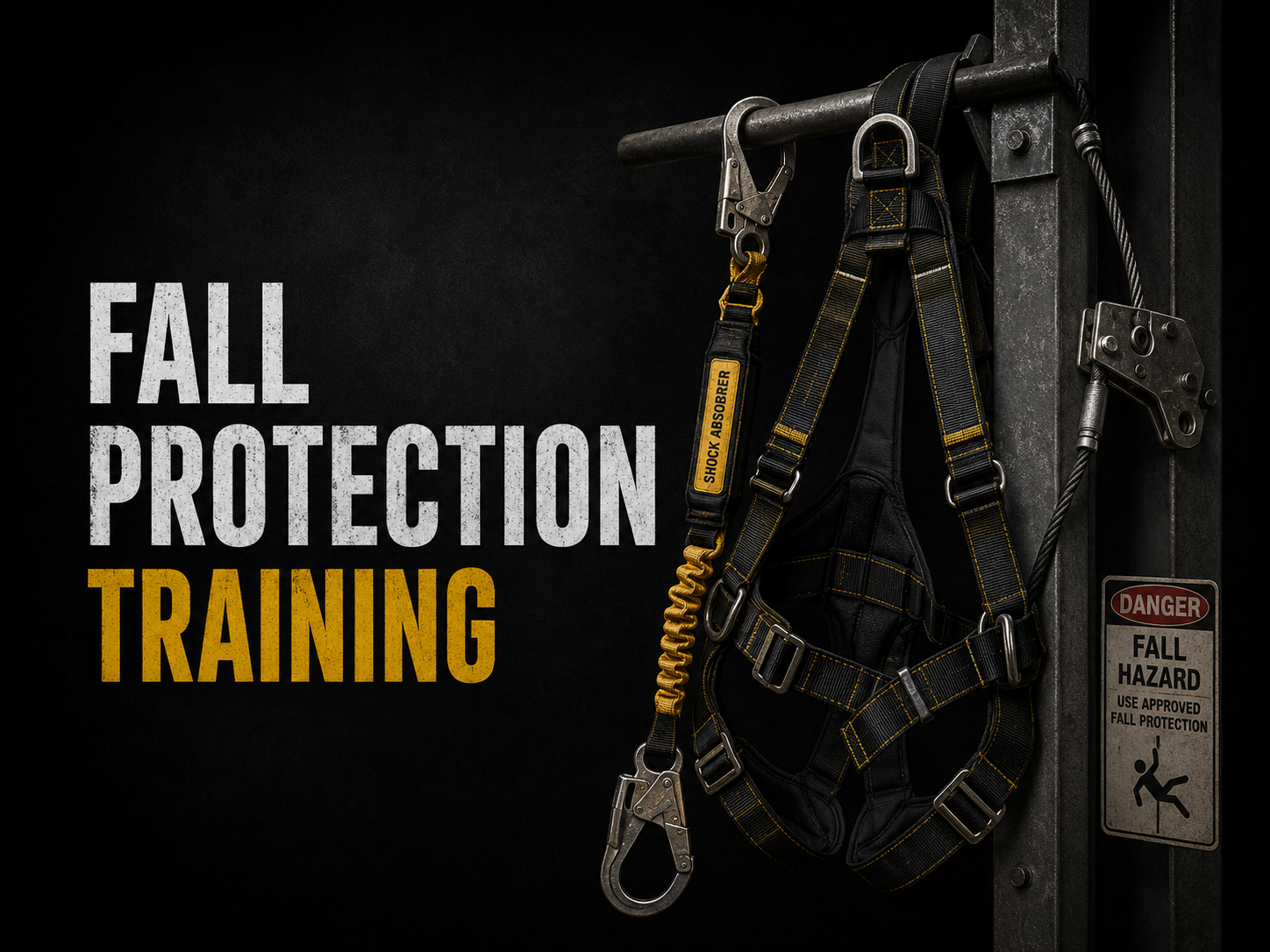
Your harness is your lifeline. Quality matters enormously. Full-body harnesses distribute fall forces across your chest, legs, and pelvis—the areas that can withstand the most impact. Always inspect harnesses before use for signs of wear, fraying, or damage. Replace any harness that has arrested a fall, as internal webbing damage may not be visible.
Recommended certification
Fall Protection Training
$30 · ~30 min online · certificate issued same day · valid 2 years
Also read: AI-Powered Drone Tower Inspections: Threat or Opportunity for Certified Climbers · Group Certification Discounts: Train Your Whole Crew for Less Than One OSHA Fine
Lanyards and Self-Retracting Lifelines
Shock-absorbing lanyards reduce the peak impact force experienced during a fall by extending slightly, dissipating energy. Self-retracting devices (also called personal fall limiters) automatically lock when rapid descent is detected, limiting fall distance to just a few feet.
Self-retracting devices are increasingly preferred in tower work because they allow more freedom of movement while providing superior protection.
Anchor Points
Never underestimate the importance of proper anchor points. They must be:
- Capable of supporting at least 5,000 pounds per attached worker
- Located above shoulder height when possible
- Free from sharp edges or abrasive surfaces that could damage your lanyard
- Inspected before every use
Practical Safety Tips for Tower Workers
Inspect Equipment Daily: Make equipment inspection a non-negotiable habit. Check your harness, lanyard, and all attachment points before climbing. Many accidents occur due to overlooked damage from previous use.
Understand Your Work Environment: Before starting work, identify all potential hazards. Where are the edges? What are the anchor points? How far would a fall extend? This assessment should happen during job planning, not when you're already at height.
Practice Proper Harness Fit: An improperly fitted harness is dangerously ineffective. Shoulder straps should be snug, leg straps secure, and the D-ring should sit at mid-back between your shoulder blades. Never wear a harness over bulky clothing that will compress in a fall.
Use Tie-Off Points Correctly: Always tie off to appropriate anchor points. Never tie off horizontally or to unsuitable structures. When working with multiple attachment points, use a horizontal lifeline system to protect yourself during movement.
Plan for Rescue: A fall protection system is only effective if rescue can happen quickly. Before you climb, know who will perform rescue and how long it will take. Delayed rescue can be as dangerous as the fall itself.
Training and Certification Matter
Understanding fall protection intellectually is only part of the solution. Hands-on training with qualified instructors ensures you develop proper habits and techniques that become automatic under stress. Professional training covers not just the "what" and "why," but the practical "how" of safe tower work.
Stay Safe and Protected
Fall protection systems save lives. By understanding these systems thoroughly and committing to best practices, you're investing in your long-term health and career in the tower industry. Remember that staying safe isn't just about following regulations—it's about getting home to your family every night.
Ready to deepen your knowledge and gain professional certification? Explore Build Right Academy's comprehensive tower worker courses and take your safety expertise to the next level.
`
Related Courses at BuildRight Academy
Get certified online — training built to OSHA standards for construction and telecom workers:
- Fall Protection For Construction
- Stairways And Ladders Awareness For Construction
Browse by category: