
Fall Protection in 2026: What OSHA Actually Requires
Falls are still the leading cause of death in construction — accounting for more than a third of all fatalities on site. The good news: nearly all of them are preventable with the right training and equipment.
When do you need fall protection?
OSHA requires fall protection at these trigger heights:
- 4 feet in general industry workplaces
- 6 feet in the construction industry
- 8 feet in longshoring operations
- Any height when working over dangerous equipment or machinery
The three lines of defense
Recommended certification
Fall Protection Training
$30 · ~30 min online · certificate issued same day · valid 2 years
Also read: Don't Wait: Complete Your OSHA Fall Protection Certification This Week Online · New Fall Protection Anchor Point Standards Transform Tower Top Work Platform Safety in Telecom Construction
1.Guardrail systems — the simplest passive protection for open edges and holes.
2.Safety net systems — used where guardrails aren't practical.
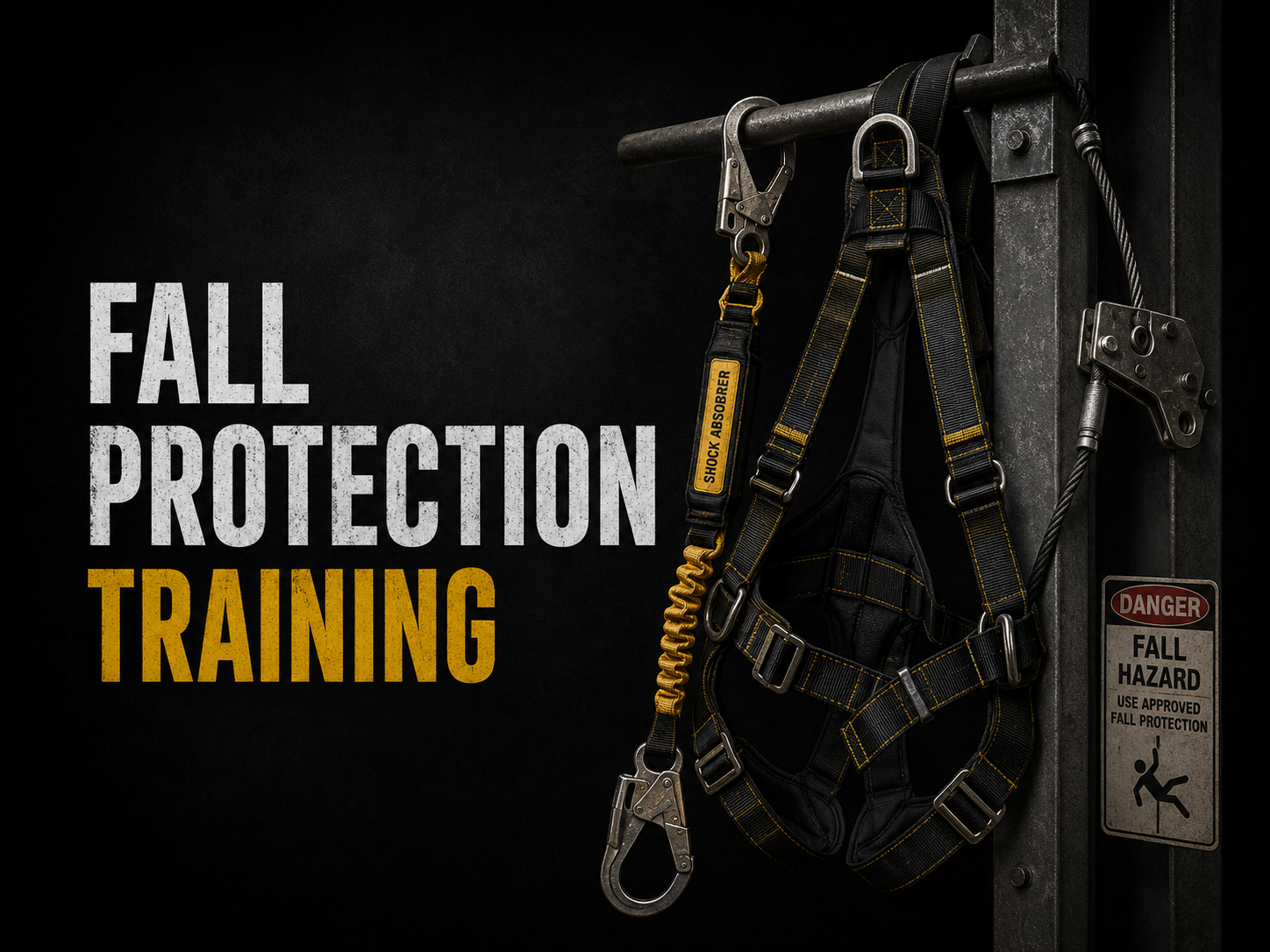
3.Personal fall arrest systems (PFAS) — harness, lanyard, and anchor point rated for 5,000 lbs.
Common violations inspectors flag
- Missing or improperly anchored tie-off points
- Damaged or expired harnesses still in use
- No rescue plan for a suspended worker
- Workers never trained on the equipment they're issued
Bottom line
Equipment alone doesn't keep workers safe — training does. A certified Fall Protection course takes a few hours and is accepted on job sites nationwide.