Electrical hazards represent one of the most dangerous threats on modern construction and telecom job sites. Every year, thousands of workers suffer serious injuries or fatalities from electrical incidents that could have been prevented with proper training and expertise. This is where qualified electrical worker training becomes essential. A qualified electrical worker (QEW) possesses the knowledge, skills, and certifications necessary to identify, evaluate, and work safely with electrical hazards—protecting not only themselves but your entire team. In today's high-voltage work environments, having properly trained QEW-certified personnel isn't optional; it's a critical investment in worker safety and legal compliance.
Defining a Qualified Electrical Worker (QEW) Under OSHA
According to OSHA regulations, specifically 29 CFR 1910.399, a qualified electrical worker is defined as a person who has received training in and has demonstrated knowledge of the construction and operation of electric equipment and installations and the hazards involved. This individual must be capable of identifying existing and predictable hazards in their electrical environment and have the training necessary to avoid them.
The key distinction is that a QEW must possess both theoretical knowledge and practical, hands-on competence. Simply reading a safety manual doesn't qualify someone. A truly qualified electrical worker understands electrical theory, can interpret diagrams and schematics, knows how to use specialized testing equipment, and recognizes dangerous conditions before they cause injuries.
OSHA emphasizes that QEW training must be task-specific. A worker qualified to work on low-voltage systems may not be qualified for high-voltage work. This specificity is crucial—QEW certification documents which types of electrical work an individual can safely perform.
Legal Obligations for Employers
Employers in construction and telecommunications have non-negotiable legal responsibilities when it comes to electrical safety. OSHA mandates that employers must ensure all workers exposed to electrical hazards receive appropriate training. Specifically:
- Employers must provide QEW training to any worker who could be exposed to electrical hazards
- Training must be documented and include the worker's name, trainer information, and competencies verified
- Refresher training is required when regulations change or when a worker demonstrates lack of knowledge
- Employers must provide necessary personal protective equipment (PPE) and testing instruments
- Regular safety audits and hazard assessments must be conducted on job sites
Failure to provide QEW training exposes companies to OSHA citations, substantial fines, and potential criminal liability if injuries or fatalities occur. Beyond legal consequences, non-compliance damages company reputation, increases insurance premiums, and reduces worker morale and retention.
The Difference Between Qualified and Unqualified Workers
Understanding the distinction between qualified and unqualified electrical workers is fundamental to job site safety. An unqualified worker is anyone without documented training and demonstrated knowledge of electrical hazards. This includes general laborers, apprentices without certification, and even experienced construction workers without specific electrical training.
An unqualified worker can only:
- Perform non-electrical tasks in areas with electrical equipment present
- Work under the direct supervision of a qualified electrical worker
- Assist with electrical work while following strict safety protocols
A qualified electrical worker can:
- Work independently on electrical systems within their certification scope
- Perform arc flash hazard analysis and risk assessments
- Execute lockout/tagout procedures safely
- Test electrical systems and diagnose problems
- Train and supervise unqualified workers
- Determine appropriate PPE requirements for electrical tasks
What Can Go Wrong Without Proper QEW Training
The consequences of inadequate QEW training on job sites are severe and often tragic. According to OSHA data, approximately 160 workers are treated in hospital emergency rooms daily for non-fatal electrical injuries, and about 20 workers are fatally electrocuted each day in the United States. Many of these incidents are preventable with proper training.
Common electrical hazards that untrained workers fail to recognize include:
- Arc flash incidents: Unqualified workers may not understand the extreme temperatures generated when electrical current jumps across a gap—capable of reaching 35,000°F and causing severe burns
- Electrocution: Contact with energized conductors can cause fatal cardiac arrhythmias, particularly if voltage exceeds 50 volts
- Improper grounding: Failure to properly ground electrical systems or use ground fault circuit interrupters (GFCIs) exposes workers to serious shock hazards
- Damaged equipment operation: Using frayed cords, damaged power tools, or defective equipment without qualified inspection
- Overhead power lines: On telecom and utility sites, contact with overhead lines causes approximately 4,400 injuries annually
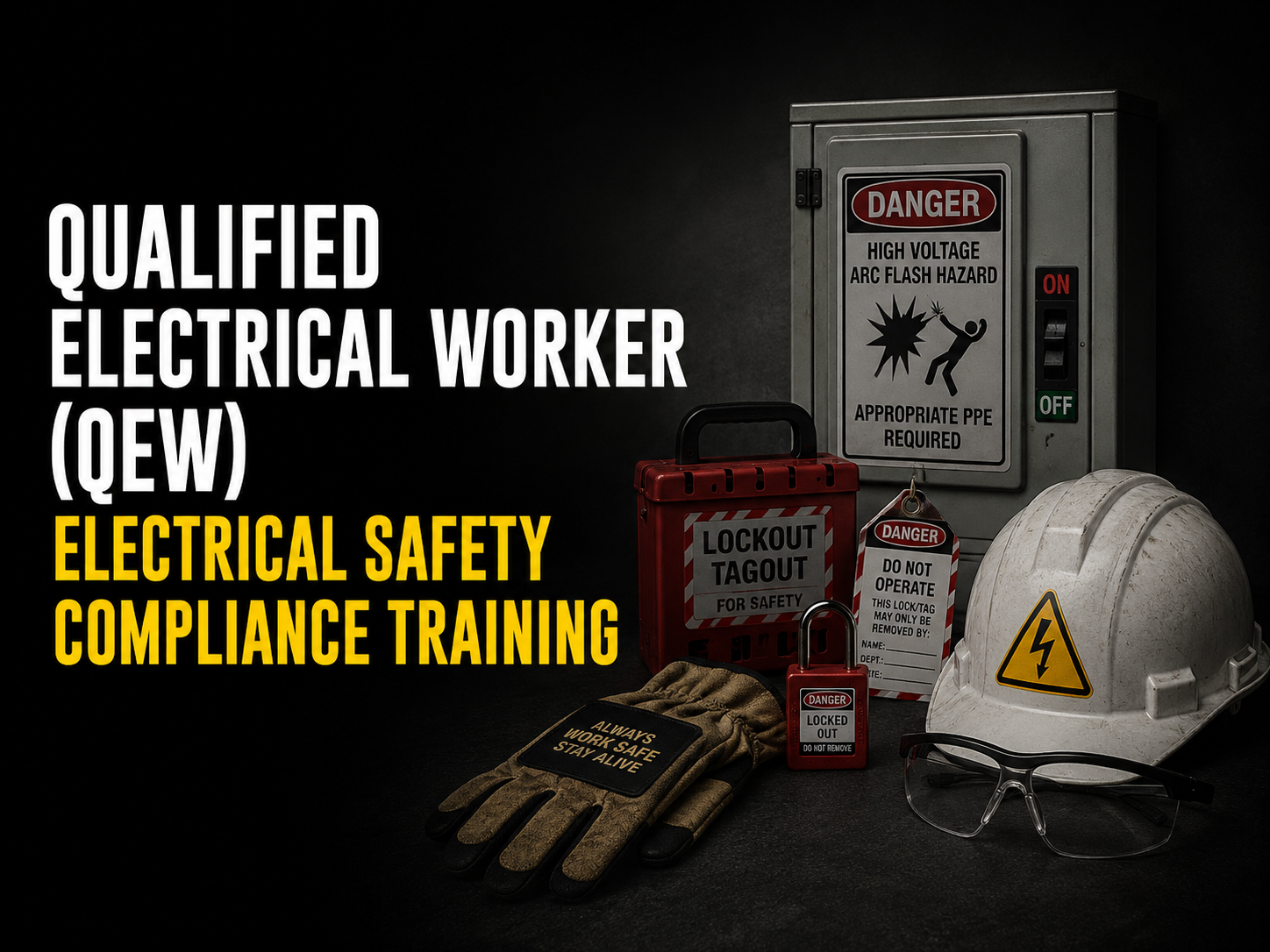
Recommended certification
Qualified Electrical Worker (QEW) — Electrical Safety Compliance Training
$80 · ~3h online · certificate issued same day · valid 2 years
Also read: NFPA 70E Electrical Safety Standard Update: What Telecom Construction Workers Need to Know · Arc Flash Hazard Recognition: What Every QEW Needs to Know
Key Skills Covered in QEW Certification
Comprehensive qualified electrical worker training covers a broad range of essential competencies:
- Electrical theory and calculations: Voltage, current, resistance, and power calculations
- Equipment identification: Recognizing different electrical devices, panels, and systems
- Safety-related work practices: OSHA standards and regulatory requirements
- Use of test equipment: Multimeters, voltage testers, insulation resistance testers, and thermal imaging cameras
- Personal protective equipment: Proper selection, use, and maintenance of PPE for different hazard levels
- Emergency procedures: CPR, first aid, and responding to electrical accidents
Arc Flash and Electrical Hazard Recognition
Arc flash represents one of the most dangerous electrical hazards on modern job sites. This phenomenon occurs when electrical current jumps across a gap in a circuit, creating a brilliant arc of light and extreme heat. Workers must understand arc flash boundaries and wear appropriate arc-rated clothing.
QEW training includes performing arc flash studies to determine flash boundaries and the required arc rating of PPE. A qualified electrical worker can:
- Calculate arc flash hazard distances
- Label electrical equipment with appropriate hazard warnings
- Determine necessary PPE based on incident energy calculations
- Develop safe work procedures to minimize arc flash risk
Lockout/Tagout (LOTO) Procedures
One of the most critical skills QEW-certified workers develop is the ability to properly execute lockout/tagout procedures. LOTO prevents the unexpected startup or release of hazardous energy during maintenance, testing, or repair work. A qualified electrical worker must understand:
- How to identify all energy sources that must be locked out
- Proper placement and securing of locks and tags
- Verification that equipment is de-energized before work begins
- How to manage group lockout situations with multiple workers
- Documentation and communication procedures
How to Get QEW Certified Online
Modern training platforms now make QEW certification accessible through online courses. Quality online qew certification programs provide comprehensive instruction with video demonstrations, interactive assessments, and documentation of competency. When selecting an online QEW training provider, ensure the program covers OSHA requirements, includes practical testing, and provides recognized certification documentation.
The advantage of online QEW training is flexibility—workers can complete courses on their schedule while maintaining job site productivity. However, hands-on components must still be verified through competency testing or supervised practical work.
Real Consequences of Non-Compliance
Companies that fail to implement proper qualified electrical worker programs face serious consequences. OSHA violations for electrical safety deficiencies carry penalties ranging from $10,000 to $145,000+ per violation. Beyond financial penalties, companies experience:
- Project delays due to work stoppages and investigations
- Worker compensation claims and associated cost increases
- Loss of insurance coverage or policy cancellation
- Damaged reputation affecting future contract bids
- Potential criminal charges if fatalities occur
Investing in proper QEW training demonstrates commitment to worker safety and significantly reduces risk across all electrical work operations.
**Get your team QEW certified today — online courses available at /courses