Working at heights is one of the most hazardous aspects of telecom construction and tower climbing. Every year, thousands of workers suffer serious injuries from falls involving stairways and ladders—many of them preventable. Yet despite OSHA standards and workplace safety training, dangerous misconceptions persist across job sites.
At Build Right Academy, we've trained hundreds of professionals in telecom construction safety, and we've noticed patterns in how workers misunderstand ladder and stairway protocols. Whether you're pursuing tower climbing certifications or advancing your 5G construction career, getting these fundamentals right could save your life.
Misconception #1: Ladders Are Fine for Long-Duration Work
One of the most common mistakes we see is workers using ladders for extended tasks. Many believe that as long as they're tied off, they can spend hours on a ladder. This is dangerously wrong.
OSHA regulations and professional telecom training courses emphasize that ladders should only be used for short-duration work—typically 15 minutes or less. Beyond that, you should be using scaffolding or other elevated work platforms designed for sustained occupancy.
Why this matters: Extended ladder use causes fatigue, reduces balance, and increases the likelihood of slips. Muscles tire, attention wanes, and accidents happen. For 5G construction projects where work on towers or infrastructure may require longer durations, proper scaffolding isn't optional—it's mandatory for compliance and worker safety.
Misconception #2: The 3-Point Contact Rule Means You're Safe Enough
You've probably heard about the "3-point contact" rule: keep three limbs in contact with the ladder at all times. While this is legitimate OSHA guidance, many workers treat it as a complete safety solution when it's really just one layer of protection.
The 3-point rule doesn't account for:
- Ladder stability on uneven ground
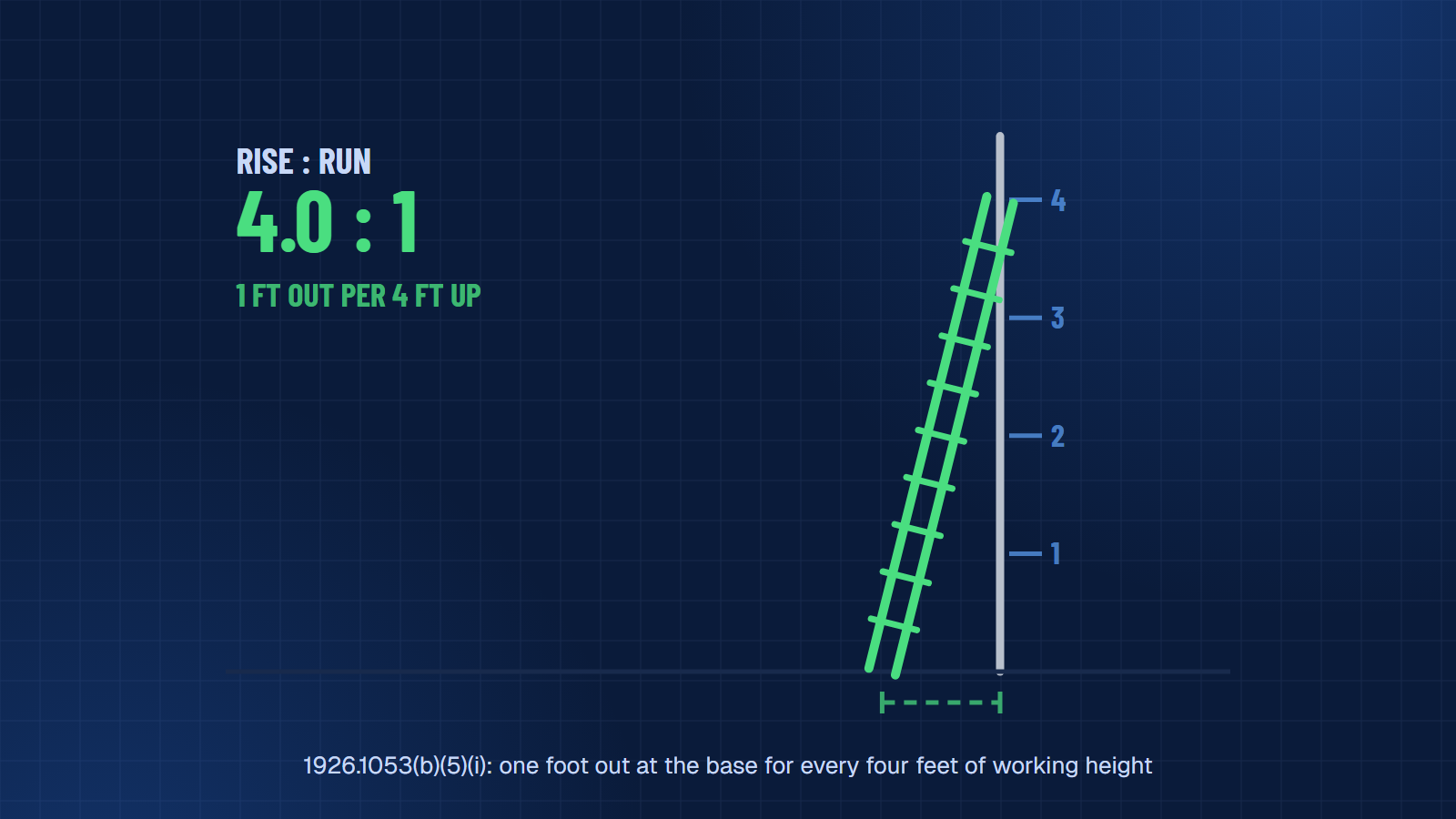
- Proper angle positioning (75-degree rule)
- Secure ladder placement and securing
- Environmental hazards like wind or electrical lines
Workers pursuing tower climbing certifications learn that 3-point contact is necessary but insufficient. You must also ensure the ladder is at the correct angle, secured at the top whenever possible, and positioned on stable, level ground. For telecom work near electrical equipment or in high-wind environments, additional fall protection systems are required.
Misconception #3: Any Ladder Will Work for Any Job
Not all ladders are created equal. Many workers grab whatever ladder is available and head to the job site. This can lead to serious problems.
OSHA requires ladders to be:
- Properly rated: Ladders have duty ratings (Type IA, Type I, Type II, Type III). Your body weight plus tools must not exceed the ladder's rating.
- Right type for the job: Straight ladders, extension ladders, and step ladders have different applications. Using the wrong type compromises safety.
- Well-maintained: Cracked rails, missing steps, or bent rungs are disqualifying defects.
In comprehensive telecom training programs, workers learn to perform pre-use ladder inspections. For 5G construction careers involving tower work, you'll need to understand which ladder types are appropriate for different heights and environments, and when ladders shouldn't be used at all (falling back on scaffolding or climbing systems instead).
Misconception #4: Stairways Don't Need the Same Respect as Ladders
Here's a subtle but critical mistake: workers often treat temporary stairways more casually than ladders because they feel more stable. This overconfidence leads to injuries.
Recommended certification
Slips, Trips and Falls for General and Construction Industry
$35 · ~1h online · certificate issued same day · valid 2 years
Also read: When the Market Falls, Bodies Follow: The Deadly Link Between Economic Downturns and Tower Climbing Deaths · Get Certified on Your Phone: How Mobile Online Courses Fit the Tower Worker Schedule
Temporary stairways used on construction sites must meet specific OSHA standards:
- Handrails must be present on both sides
- Steps must have a minimum tread depth of 10 inches
- Maximum rise between steps is 12 inches
- Stairs must be secured to prevent shifting
Many workers skip holding railings or take stairs too quickly because they don't perceive them as "real" climbing. Yet falls on temporary stairways account for a significant portion of workplace injuries. Whether you're enrolled in basic safety training or advanced tower climbing certifications, respecting stairway protocols is essential.
Misconception #5: Fall Arrest Systems Eliminate Ladder Safety Requirements
Modern fall protection systems are excellent, but they're a last resort—not an excuse to ignore other safety rules. Some workers think that because they're wearing a harness, they don't need to maintain 3-point contact or use a stable ladder.
This is backwards thinking. Fall arrest systems are designed to catch you if you fall, but the goal is to prevent falls from happening in the first place. A proper telecom training curriculum teaches a hierarchy of controls:
- Elimination: Avoid the hazard altogether if possible
- Engineering controls: Use proper ladders, scaffolding, and stairways
- Administrative controls: Follow procedures and inspect equipment
- PPE (Personal Protective Equipment): Fall arrest systems as final protection
For a 5G construction career, this hierarchy is critical. You'll encounter situations where multiple layers of protection are required, and understanding why each layer matters is key to staying safe.
Misconception #6: Weather Doesn't Significantly Impact Ladder Safety
Many workers misjudge how much environmental conditions affect climbing safety. Rain, wind, and cold are more than minor inconveniences—they're serious hazards.
Rain: Wet rungs are slippery, reducing friction and increasing slip risk dramatically.
Wind: Even moderate wind can destabilize a ladder, especially at height.
Cold: Cold hands lose dexterity and sensitivity, making it harder to maintain grip and balance.
OSHA guidelines and professional telecom training recommend postponing ladder work during adverse weather. For workers with tower climbing certifications, understanding when weather conditions make a job unsafe isn't a suggestion—it's a professional responsibility.
Getting It Right: Invest in Proper Training
The stakes of getting stairway and ladder safety wrong are high. Injuries from falls can be life-altering, affecting not just you but your family and team.
The good news? Proper training eliminates most of these misconceptions quickly. When you understand the science and regulations behind these rules—not just memorize them—you'll make better decisions on the job site.
Ready to get certified? Browse our courses at Build Right Academy to find training programs in telecom construction safety, tower climbing certifications, and 5G construction careers. Our expert instructors teach not just what the rules are, but why they matter—helping you build a safer, more successful career in telecom construction.