A Qualified Electrical Worker (QEW) is a professional who has received specialized training and certification to work safely with electrical systems and equipment. QEW certification demonstrates that an individual possesses the knowledge, skills, and competencies required to recognize electrical hazards and take preventive measures to protect themselves and others on job sites. QEW training is essential for construction workers, electricians, telecom technicians, and maintenance personnel who encounter electrical hazards as part of their daily responsibilities. This comprehensive guide will help you understand QEW certification requirements, training content, and how to obtain your qualified electrical worker certification through online education.
What is a Qualified Electrical Worker (QEW)?
A Qualified Electrical Worker is an individual who has been trained and authorized to work on or near exposed electrical conductors or circuit parts. The definition, established by OSHA standards, requires QEW certification holders to have practical experience combined with theoretical knowledge of electrical hazards and safety protocols. A qualified electrical worker must understand electrical theory, recognize potential dangers, and implement appropriate safety measures in their work environment.
The key distinction between a qualified and unqualified electrical worker lies in training and knowledge. An unqualified worker lacks the necessary instruction to safely manage electrical hazards, while a qualified electrical worker has completed formal QEW training and understands how to:
- Identify electrical hazards in their workplace
- Understand voltage levels and their potential dangers
- Apply appropriate personal protective equipment (PPE)
- Implement lockout/tagout procedures
- Recognize arc flash hazards and mitigation strategies
- Follow OSHA electrical safety standards
Why QEW Certification Matters
QEW certification is critical for workplace safety and legal compliance. Electrical hazards are among the most dangerous in construction and industrial environments, causing approximately 10% of workplace fatalities according to OSHA data. Obtaining your QEW certification ensures you're equipped to prevent accidents, injuries, and fatalities on the job site.
Beyond safety, QEW certification provides significant career advantages. Employers actively seek qualified electrical workers because they reduce insurance costs, minimize workplace injuries, and demonstrate professional competency. Many construction companies and telecom organizations require QEW certification as a condition of employment. Additionally, certified workers often earn higher wages and have access to more job opportunities in competitive markets.
Legal protection is another crucial benefit. When workers hold proper QEW certification, employers can demonstrate due diligence in safety training, which is essential during OSHA investigations or workplace incident reviews. This protection extends to both employers and employees, reducing liability exposure and ensuring compliance with federal regulations.
OSHA Requirements for Qualified Electrical Workers (29 CFR 1910.332)
OSHA standard 29 CFR 1910.332 specifically addresses training requirements for employees exposed to electrical hazards. This regulation establishes mandatory guidelines for QEW training content and frequency. According to 29 CFR 1910.332, employers must provide training to employees who are exposed to electrical hazards that are not reduced to a safe level by electrical equipment design features or administrative or engineering controls.
The standard requires that training cover:
- Electrical hazards identification and safety-related work practices
- Safety techniques, procedures, and use of protective equipment
- Recognition of electrical hazards and their magnitude
- Safe distances from electrical conductors and circuit parts
- Proper use of test equipment and meters
- Arc flash hazard assessment and protection
OSHA requires that QEW training be refreshed periodically, typically every three years, or whenever job conditions change, new equipment is introduced, or if a worker demonstrates lack of knowledge. Documentation of QEW training completion is mandatory for compliance verification during OSHA inspections.
What QEW Training Covers
Comprehensive QEW training addresses multiple critical areas of electrical safety. The curriculum begins with electrical fundamentals, including voltage, current, resistance, and power calculations. Understanding these basics helps workers recognize electrical hazards and implement appropriate safety measures.
Recommended certification
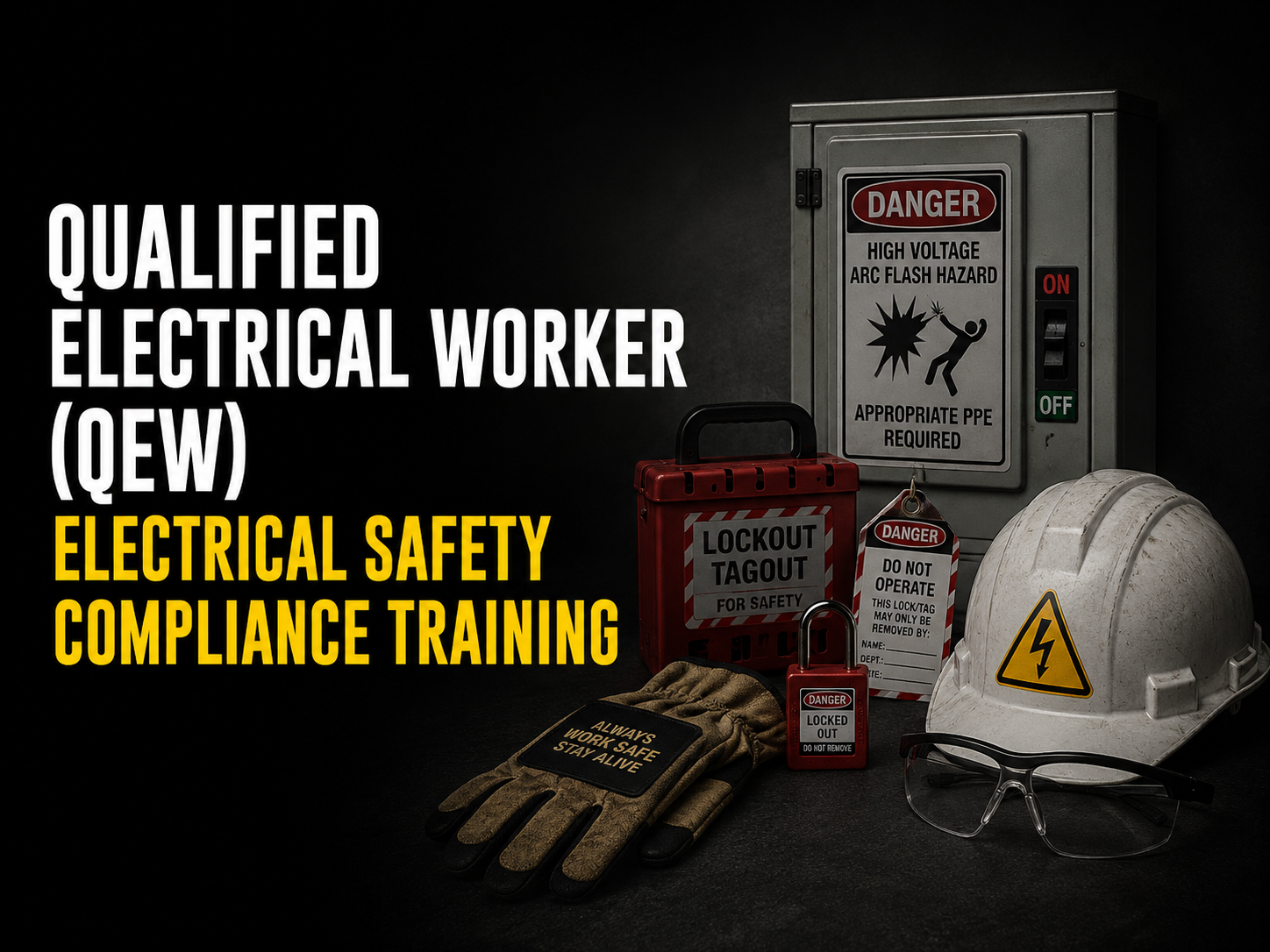
Qualified Electrical Worker (QEW) — Electrical Safety Compliance Training
$80 · ~3h online · certificate issued same day · valid 2 years
Also read: Get Certified in Electrical Safety Before Your Next Project Starts · Get Certified on Your Phone: How Mobile Online Courses Fit the Tower Worker Schedule
Lockout/Tagout (LOTO) procedures form a core component of QEW training. Workers learn how to properly isolate electrical energy sources before maintenance or repairs begin, ensuring that unexpected startup cannot occur. This critical skill prevents serious injuries and fatalities during equipment service.
Arc flash hazard recognition and prevention is another essential training element. Workers learn to identify potential arc flash hazards, calculate incident energy levels, and select appropriate arc-rated personal protective equipment. Understanding arc flash physics helps workers appreciate the extreme dangers of electrical work.
QEW training also covers electrical hazard recognition in various contexts, including:
- Working near overhead power lines
- Handling portable electrical equipment and cords
- Working in wet or damp environments
- Identifying damaged or defective electrical equipment
- Understanding ground fault circuit interrupter (GFCI) devices
- Proper PPE selection and usage
Who Needs a QEW Certification
QEW certification is essential for professionals in multiple industries who work with electrical systems. Construction workers who install wiring, troubleshoot electrical problems, or work near electrical hazards require QEW certification. Electricians and electrical contractors must hold valid QEW certification to perform their duties safely and legally.
Telecom workers who install communication lines, network equipment, and related infrastructure frequently encounter electrical hazards and must obtain QEW certification. Maintenance personnel who service equipment with electrical components need this qualification to work safely and comply with OSHA standards.
Even workers who don't directly work with electrical systems but are exposed to electrical hazards benefit from QEW training. This includes site supervisors, project managers, and safety personnel who need to understand electrical hazards to oversee work sites effectively.
Online QEW Certification Process
Modern QEW training is increasingly available through online platforms, offering flexibility and accessibility without compromising training quality. The online QEW certification process typically involves several stages:
- Registration and enrollment in an approved QEW course
- Online coursework completion covering electrical safety theory and practical applications
- Interactive modules addressing specific OSHA requirements and hazard recognition
- Knowledge assessment through quizzes and examinations
- Certification issuance upon successful completion of all requirements
Quality online QEW training maintains rigorous standards equivalent to in-person instruction. Participants gain comprehensive knowledge through multimedia content, virtual demonstrations, and interactive scenarios that simulate real-world electrical hazards. Upon completion, participants receive a QEW certification document valid for three years.
QEW Certification for Telecom and Construction Workers
Telecom workers face unique electrical hazards when working with power lines, telecommunications infrastructure, and related equipment. QEW certification tailored for telecom workers emphasizes hazards specific to their industry, including high-voltage power line proximity, grounding procedures, and equipment-specific safety protocols.
Construction workers require QEW certification to safely navigate job sites containing electrical equipment, machinery, and temporary power distribution systems. Construction-focused QEW training addresses hazards common to building sites, such as portable tool safety, temporary lighting systems, and proper cord management.
Both telecom and construction workers benefit from qualified electrical worker training that combines theoretical knowledge with practical application scenarios relevant to their specific work environments. This targeted approach ensures workers can immediately apply their training to real-world situations.
Ready to advance your career and ensure workplace safety? Get your QEW certification 100% online at Build Right Academy. Our comprehensive qualified electrical worker training meets all OSHA requirements and provides flexible, affordable certification for construction and telecom professionals. Visit our electrical safety courses today to get started and become a certified qualified electrical worker.
