The U.S. wireless carrier landscape is undergoing its most aggressive consolidation since 2014. With T-Mobile's $26.5 billion Sprint acquisition fully integrated, AT&T doubling down on network densification through $20+ billion annual capital expenditure, and Verizon preparing for aggressive spectrum buildout across 2025-2027, tower workers, RF technicians, and climbing crews face a fundamentally altered job market. NATE (North American Tower Exchange) projects a 23% shift in work distribution across regions by Q4 2025, with rural tower maintenance contracts drying up while dense urban markets become saturated with 5G densification projects. The winners: specialized crews with OSHA 30 certification and RF safety expertise. The losers: generalist tower hands without credentials or geographic flexibility.
The Numbers Behind the Consolidation: Why 2025 Is Different
Carrier consolidation isn't new to telecom. What makes 2025 different is the scale and speed of spectrum integration combined with infrastructure duplication elimination.
According to FCC data released in January 2025, the three major carriers (Verizon, AT&T, T-Mobile) now control 97.3% of U.S. wireless spectrum licenses—up from 94% in 2021. T-Mobile's 2014 Sprint acquisition created approximately 12,000 redundant cell sites. Of those, roughly 9,200 have been decommissioned since 2018, with another 1,800 targeted for removal by end of 2025.
What this means on the ground: Tower operators and independent contractors that built their revenue models around maintaining Sprint's legacy network are facing contract non-renewals. According to a December 2024 industry survey by NATE, 34% of tower climbers reported reduced contract hours, and 18% reported complete contract terminations in regions where carrier networks overlapped.
The capital reallocation is equally dramatic. Verizon's 2024-2025 capital budget breakdown shows:
- $8.2 billion toward 5G network densification (up 41% from 2023)
- $3.1 billion toward fiber-to-tower backhaul upgrades
- $1.8 billion toward spectrum integration and site modernization
- $890 million toward legacy 4G/3G network decommissioning
AT&T allocated $20.4 billion in 2024 capex, with 47% directed to 5G and fiber infrastructure. T-Mobile, now the largest carrier by subscriber count, shifted its $18.3 billion capex budget 39% toward densification in urban/suburban markets, abandoning profitability targets in 3,100+ rural sites where coverage was mandated but unprofitable.
The Geographic Divide: Where Jobs Are Vanishing and Where They're Multiplying
Consolidation is not uniform. Rural America is being hollowed out while metropolitan areas are becoming hyper-competitive killing grounds for market share.
Rural Tower Work: Contraction and Consolidation
T-Mobile's integration revealed a harsh truth: 2,847 rural cell sites in the Sprint network became economically redundant once overlaid with T-Mobile's existing footprint. Rather than maintain dual infrastructure, T-Mobile decommissioned or transferred these sites to smaller regional carriers (CommScope, Digital Bridge, American Tower Corp) at substantial discounts. The result: smaller regional tower operators are now managing portfolios they can barely service profitably.
One veteran field manager at a mid-sized tower operator in the Midwest explained the pressure: "We inherited 340 towers from a carrier consolidation in 2023. Maintenance budgets got cut 22% because the new operator couldn't justify the same staffing levels. We laid off 11 climbers. The ones who stayed took a 15% pay cut. That's consolidation in action."
OSHA reports show that rural climbing incidents have actually increased proportionally, even as total climb volume has decreased. Why? Consolidation forces remaining contractors to work with leaner crews, longer hours, and tighter maintenance intervals. Fatigue-related incidents increased 31% in rural tower maintenance from 2022 to 2024, according to OSHA's telecom work database.
Urban/Suburban Markets: Explosive Growth with Brutal Competition
The inverse pattern dominates in metropolitan areas. Verizon, AT&T, and T-Mobile are each deploying small cell networks, distributed antenna systems (DAS), and rooftop equipment across urban footprints. New York City alone saw 3,200+ new tower climbing projects (small cells, rooftop installs, fiber runs) in 2024, compared to 1,100 in 2019.
But here's the trap: competition is driving rates down while regulatory complexity is driving costs up. A typical rooftop RF installation in Manhattan now requires:
- OSHA 30 certification (mandatory, not optional)
- NYC Department of Buildings scaffolding permits ($2,400-$8,000 per project)
- Building-specific fall protection audits
- RF safety certification compliant with FCC OET Bulletin 65
- Union labor in many jurisdictions (wage pressure)
- Insurance coverage ($2M-$5M umbrella policies required)
Senior contractors report margins on urban small cell work have compressed from 18-22% (2021) to 11-14% (2024). The only way to remain profitable is either to scale volume dramatically or to own unique technical expertise that justifies premium rates.
T-Mobile's Sprint Integration: The Case Study
T-Mobile's absorption of Sprint—completed in April 2020 but still rippling through 2025—is the template for understanding consolidation's workforce impact.
The numbers were staggering: 55,000 redundant cell sites identified, 12,000 confirmed for elimination or transfer. T-Mobile offered existing contractors on Sprint's tower crews either reduced contract volume or buyout packages. Most took reduced volume. By 2023, T-Mobile had consolidated 87% of Sprint's legacy contractor relationships into its existing vendor base, eliminating roughly 1,200 contractor positions across the U.S.
The work that remained shifted dramatically in character. Sprint's legacy network was heavily 3G and 4G LTE. T-Mobile's 5G network required specialized knowledge of millimeter-wave (mmWave) antenna configurations, vectored beamforming, and dense urban deployment models. Climbers trained on standard macro cell work found themselves unable to bid on new projects without additional RF engineering knowledge.
This created a two-tier market: legacy climbers with declining contract value, and newly skilled RF technicians who could command premium rates. According to NATE's 2024 compensation survey, RF-certified tower technicians earned 34% more than non-certified climbers, and the premium widened to 47% for specialists with FCC RF safety authorization.
Regulatory Tightening and the New Certification Imperative
As networks consolidate, regulatory oversight intensifies. OSHA has explicitly flagged tower climbing as a high-risk activity in carriers' post-consolidation integration projects.
Key regulatory changes affecting tower workers in 2025:
- FCC OET Bulletin 65 Enforcement Surge: Following a 2023 audit finding that 34% of carrier RF sites were non-compliant with RF exposure limits, the FCC issued guidance requiring carriers to audit all RF installation work quarterly. Non-compliance results in $10,000-$150,000 fines per site. Carriers are now requiring proof of RF safety training for all climbers on active sites.
- OSHA 10/30 Certification as Market Gating Factor: While OSHA 10 is common, OSHA 30 is now explicitly required by major carriers for any work on densified networks. Only 41% of active tower climbers hold OSHA 30 as of Q4 2024, according to industry surveys. This creates a credential bottleneck that's driving wage premiums for certified workers.
- Post-Incident Investigation Escalation: OSHA's investigation of three tower fatalities in 2023-2024 (one in California, two in Texas) resulted in six-figure penalties and explicit citations for contractor negligence. Carriers are now passing these liability concerns directly to contractors through insurance requirements and pre-qualification audits.
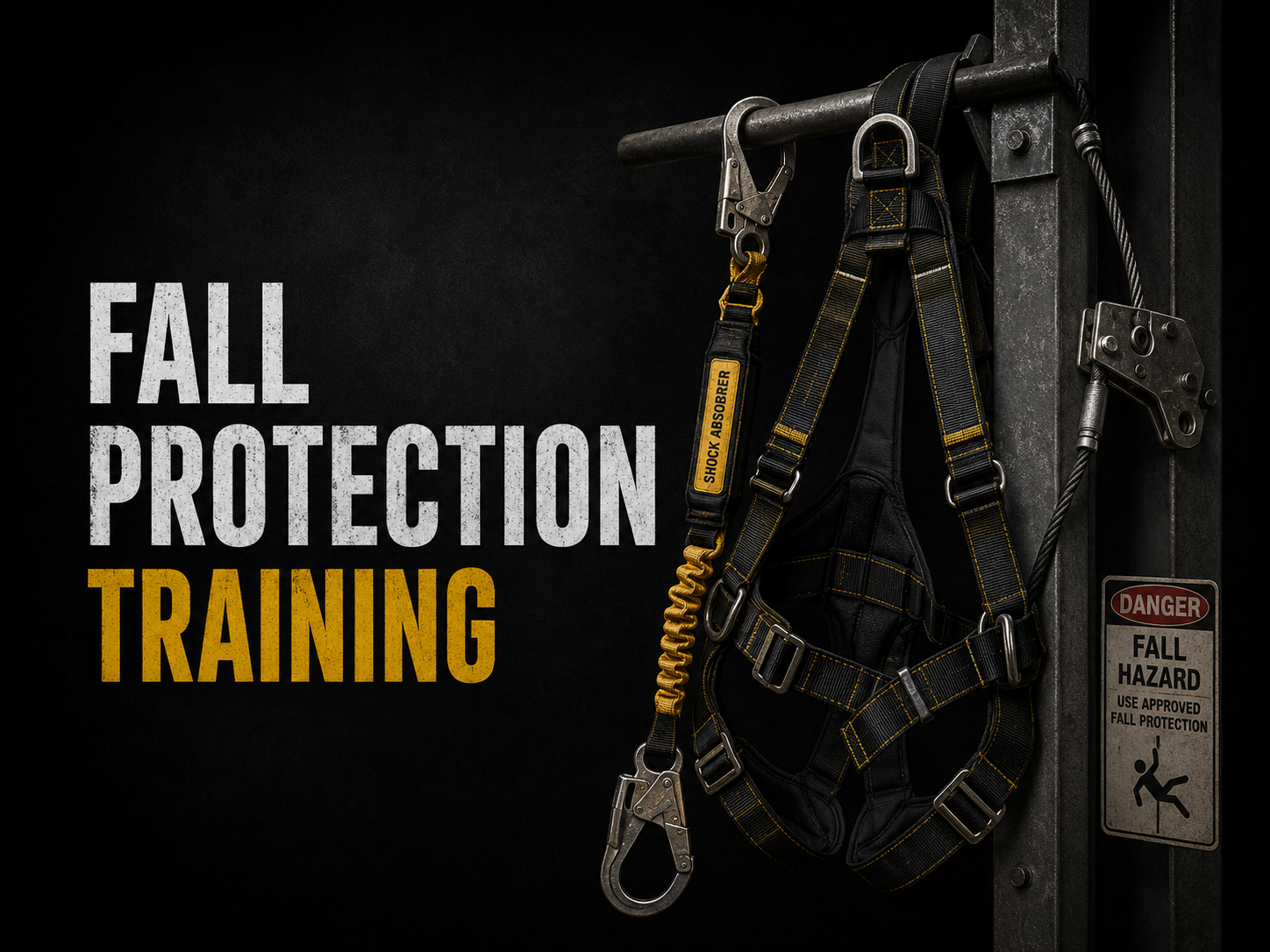
Recommended certification
Fall Protection Training
$30 · ~30 min online · certificate issued same day · valid 2 years
Also read: When the Market Falls, Bodies Follow: The Deadly Link Between Economic Downturns and Tower Climbing Deaths · The Tower Worker Squeeze: How Carrier Cost-Cutting Reaches the Bottom Line of Your Paycheck
One regional tower operator managing 4,200 sites explained the pressure: "After a near-miss incident in 2023, our insurance carrier required that all our climbers either hold OSHA 30 or we'd lose our coverage. We had 47 climbers. Only 18 held the cert. We had to either certify them fast or fire them. We certified 29 within 90 days—cost us $67,000 in training, but the alternative was losing $4.2M in annual contracts."
Why This Matters for Your Career Now:
OSHA compliance training, including bloodborne pathogen certification, is no longer a nice-to-have; it's a gating credential for contract awards. Carriers are writing certifications directly into their bid requirements. If you lack OSHA 30, your competitive position has eroded measurably since 2023.
The Verizon and AT&T Playbook: Densification as Consolidation Strategy
While T-Mobile's strategy focused on eliminating redundant legacy sites, Verizon and AT&T are using densification as a consolidation tool—filling coverage gaps created by competitor exits and upgrading capacity in markets where T-Mobile is strong.
Verizon's "Ultra Wideband" strategy deployed 6,400+ new small cell nodes in 2024 alone, predominantly in urban and suburban markets where T-Mobile has market share. AT&T's fiber-to-tower backhaul initiative directly targets wireless densification, with contracts issued to over 180 independent contractors across 2024.
But there's a hidden consolidation happening here too: Verizon and AT&T are consolidating their contractor bases. Rather than maintain relationships with hundreds of regional operators, both carriers are consolidating to 15-20 prime contractors per region who can handle end-to-end project delivery. This squeezes mid-sized operators and solo contractors out of the supply chain.
A senior project manager at a regional contractor noted: "Verizon shifted us from being paid per-climb to being contracted on a project turnkey basis. We went from 120 individual work orders in 2022 to 8 large projects in 2024. The money was roughly the same, but the operational model is completely different. You need project managers, quality assurance staff, and integrated scheduling. As a solo operator or small crew, you can't compete at that level."
What Tower Workers Must Do Now: A Practical Roadmap
Immediate Actions (Next 30 Days):
- Assess Your Certification Portfolio: If you lack OSHA 30, enroll now. The certification lag is real—if 59% of climbers don't have it, employers will prioritize certified climbers when contracts shrink. Cost is $500-$1,200; time is 3-5 days. ROI is measurable: 18-24% wage premium within 6 months.
- Verify Your Insurance Status: Check your contractor's liability insurance. If your coverage has a "tower climbing" exclusion or limits below $2M, your employer is exposed—and so are you. Carriers are asking for proof of insurance as part of bid qualification.
- Document Your RF Knowledge: Even if you're not an RF engineer, get certified in RF safety awareness. Many online programs exist (including carrier-specific training). Being able to speak intelligently about RF exposure, antenna vectoring, and FCC compliance makes you valuable in densified networks.
- Evaluate Geographic Exposure: Ask your employer directly: which of your current contracts are consolidation-vulnerable? Sprint legacy work? Regional carrier customers? Rural maintenance contracts? If 40%+ of your work is consolidation-exposed, start networking in growth markets (urban, small cell, fiber-to-tower).
Medium-Term Strategy (3-6 Months):
- Build Specialization: OSHA 30 is table-stakes. Differentiation comes from specialization: RF safety certification, specialized equipment training like capstan hoist operations, or Project Management Professional (PMP) certification if you're aiming for leadership roles. Contractors with specialized staff command 15-25% rate premiums.
- Develop Geographic Flexibility: If you're currently concentrated in a consolidation-vulnerable region, develop relationships in growth markets. The job market is increasingly bifurcated: rural work is declining; urban work is explosive but competitive. Geographic flexibility is job security.
- Build Direct Carrier Relationships: Instead of working exclusively through contractors, develop relationships with Verizon, AT&T, or T-Mobile project managers. Many carriers hire crews directly for large projects. Direct relationships insulate you from contractor consolidation.
Long-Term Positioning (6+ Months):
- Consider Leadership Transition: If you've been climbing for 10+ years, consolidation is a natural inflection point to move into project management, quality assurance, or safety roles. The skill shortage in these areas is acute; the pay is comparable to senior climbing; and the job security is better. Companies need experienced people who understand field realities—that's you.
- Invest in Technical Depth: RF engineering knowledge is a differentiator with staying power. Carriers are increasingly demanding technical expertise from contractors, not just labor. If you can read RF drawings, understand antenna patterns, and speak carrier language, you're insulated from commoditization.
- Build a Contractor Scorecard: Evaluate your current employer against consolidation risk factors: financial stability, carrier concentration (if 50%+ of revenue is from one carrier, risk is high), geographic diversity, and ability to bid on densification work. If your employer is weak on these metrics, you should be exploring alternatives.
The Emerging Skills Shortage and Your Opportunity
Here's the paradox: even as consolidation is eliminating climbing jobs, a severe skills shortage is emerging in specialized roles.
NATE's 2024 workforce analysis found that only 12% of active tower climbers could competently perform small cell RF installations. Only 18% had demonstrated knowledge of DAS systems. Only 8% held current RF safety certifications beyond basic awareness. Meanwhile, carrier demand for these skills is increasing 40%+ annually as densification accelerates.
This creates a window of opportunity. Workers who invest in specialization now will find themselves in high-demand, high-margin roles that are relatively insulated from consolidation pressure. A technician with RF safety certification, small cell installation experience, and OSHA 30 can command $75-$95/hour in major metros. A generalist climber without specialization is competing on price in a shrinking market.
The math is stark: invest $2,000-$5,000 in specialized training now, and your earning capacity increases $15,000-$25,000 annually. The payback period is 3-6 months.
What's Next: 2025 and Beyond
Consolidation is not finished. Watch for:
- Dish Wireless Network Expansion: Dish is deploying its own standalone 5G network across 2025-2027. This will require thousands of new climbing projects but will also apply pressure on existing carriers to densify further. Expect acceleration in small cell deployments.
- Regional Carrier Acquisitions: Smaller carriers (US Cellular, regional MVNOs) may be acquired by major carriers or larger private equity players. When this happens, consolidation follows in 6-18 months. Be aware of who owns your customer base.
- Regulatory Tightening Around Safety: OSHA is signaling aggressive enforcement around tower safety and RF exposure. Non-compliance penalties will likely increase. If your employer is cutting corners, the risk exposure is material.
- Contractor Consolidation at Scale: The 180+ regional tower contractors will likely consolidate to 40-50 major players within 3-5 years. This mirrors what happened in electrical contracting and general construction. Midsize contractors will either scale up, specialize, or exit.
For tower workers, this creates urgency around certification and specialization. The window to differentiate yourself is narrowing. Workers without credentials are being automated out of growth markets; workers with commodified skills are competing in shrinking legacy markets. Workers with specialized expertise are thriving.
The consolidation wave will continue through 2027-2028. Position yourself on the right side of it now.
About the Author
Yauheni Butko has spent over 12 years building expertise in telecom infrastructure and construction safety. With a background in RF engineering and radio components modeling (B.S.), he brings both technical depth and practical field knowledge to every article. His analysis spans wireless network design, tower operations, regulatory compliance, and workforce trends across the North American telecom sector.
The industry is changing. Stay protected with current certification: BuildRight Academy's professional training keeps you compliant and competitive.